
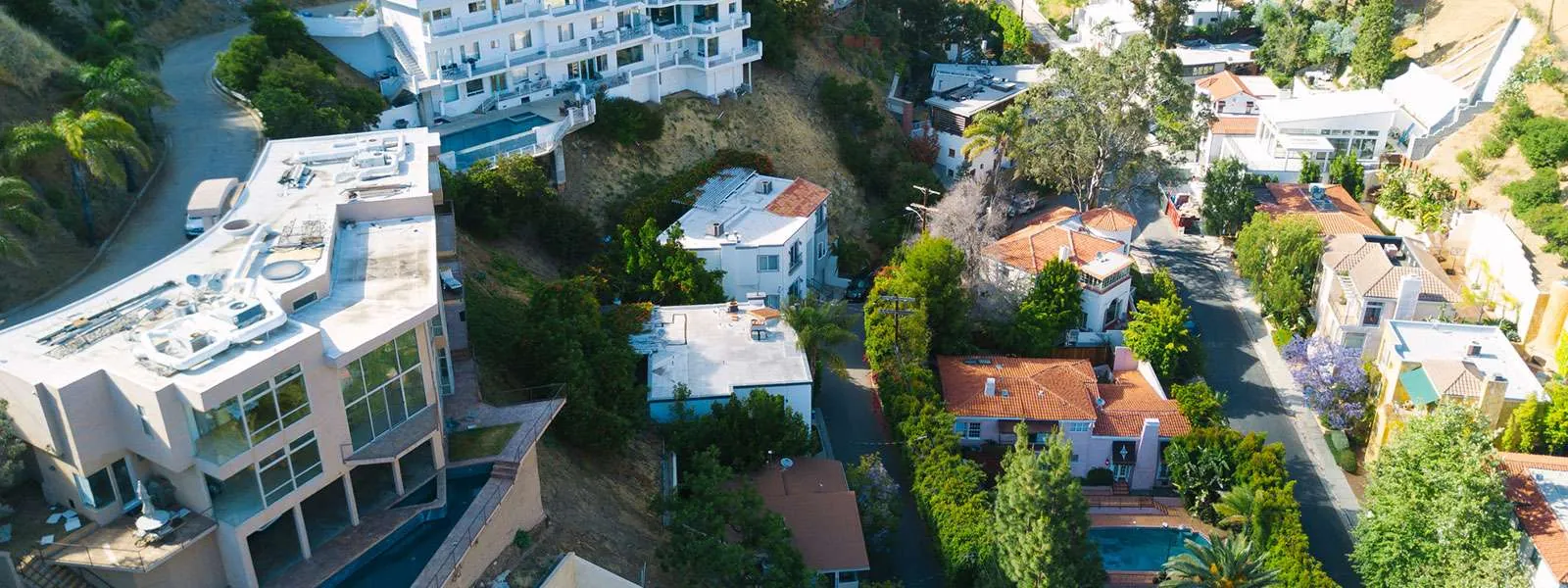

Valley Village real estate is the quiet middle ground of the east San Fernando Valley: tree-lined streets of 1930s and 1940s houses tucked between Studio City, Sherman Oaks and North Hollywood, priced a step below its southern neighbors. Expect a median sale price around $1.2 million for a single family home, with condos along Laurel Canyon and Chandler starting well under that. The area attracts entertainment industry professionals who work at the Burbank and Universal studios, young families drawn by Colfax Charter Elementary, and buyers priced out of Studio City who still want walkable blocks. What makes it distinct is the small-town feel: blue reflective street markers, the Chandler Bikeway, and a neighborhood council that fought for its own identity in 1991. James Malcom has represented buyers and sellers here for years and knows which blocks south of Magnolia trade at a premium and why.
Valley Village Real Estate Market Overview
Per Redfin, June 2026, the median sale price in Valley Village was $1,228,573, down 6.4 percent year over year, with a median of $640 per square foot. Homes spent a median of 56 days on market, 18 days longer than a year earlier, and 38 homes closed. Redfin still rated the neighborhood “somewhat competitive” with a sale-to-list ratio of 101.3 percent, so well-priced homes still draw over asking even as the pace has slowed.
Zillow’s Home Value Index for Valley Village stood at $1,254,787 as of June 30, 2026, up 1.2 percent over twelve months, with a median list price of $1,131,333. Movoto counted about 66 active listings in July 2026. The market is best described as balanced: buyers have leverage on overpriced listings, sellers still hold it on turnkey homes under $1.5 million.
The property mix is roughly two thirds single family homes and one third condos and townhomes. Entry level is condos on Laurel Canyon, Chandler and Riverside Drive, generally $500,000 to $800,000. The mid band, and the bulk of Valley Village real estate, is original or updated single family homes from about $1.1 million to $1.8 million. The top band is new construction and full remodels south of Magnolia and near Colfax, where $2 million to $3.5 million sales are now routine. Market data last reviewed August 2026.
Homes for Sale in Valley Village
Valley Village homes for sale are dominated by single story houses built between the mid 1930s and the late 1950s, when studio employees settled the area. The classic product is a 1,400 to 2,000 square foot Traditional on a 6,000 to 8,000 square foot lot, often with a detached garage turned ADU. You will also find Spanish Revival cottages near Colfax and Hermitage, 1950s ranches in the north half, and a growing number of two story modern farmhouse rebuilds.
Condos are concentrated along Laurel Canyon, Chandler, Whitsett and Riverside Drive in three and four story buildings from the 1970s through the 2010s; HOA dues vary widely, so read the reserves closely. There are no gated communities and almost no HOAs for single family homes. Lots are flat, with mature trees and deep rear yards the norm. Notable streets include Hesby, Otsego, Addison, Bellingham Avenue and Colfax between Magnolia and Riverside.
Valley Village Neighborhoods and Enclaves
South of Magnolia
The heart of Valley Village real estate. The blocks between Magnolia and the 101, from Colfax to Whitsett, carry the highest prices and the most rebuilds. Hesby, Otsego and Addison have the widest lots, the biggest canopies and easy access to Ventura Boulevard. Expect $1.5 million to $3.5 million depending on whether the house is original or new.
Chandler Bikeway Corridor
Chandler Boulevard splits around the old Pacific Electric right of way, now a landscaped bike path running east to North Hollywood and Burbank. Side streets off Chandler mix 1940s Traditionals and 1950s ranches, typically $1.1 million to $1.6 million, a quick pedal from the NoHo Metro station.
Colfax Avenue and the Studio City Edge
The streets off Colfax between Magnolia and the freeway sit inside the Colfax Charter boundary, directly across the 101 from Studio City’s Colfax Meadows. This is where buyers who lost out in Studio City land, and prices reflect it: remodels routinely close north of $2 million, originals start around $1.4 million.
Laurel Canyon Boulevard Condos
The condo spine of the neighborhood. Buildings along Laurel Canyon from Magnolia to Riverside offer two bedroom units from $550,000 to $800,000, many with secure parking and pools. It is the most affordable way into 91607 and appeals to first-time buyers and downsizers who want to stay close to Ventura Boulevard.
North Valley Village
Between Chandler and Burbank Boulevard, the stock shifts to 1950s ranches on slightly smaller lots, with more original condition homes and better entry pricing, generally $950,000 to $1.4 million. Burbank Boulevard Elementary serves this section, and the Burbank studios are under fifteen minutes away.
Whitsett Avenue and the Tujunga Wash
The western edge along Whitsett and the Tujunga Wash Greenway is a quieter pocket with small apartment buildings on the boulevard and single family streets behind them. The greenway adds a rare strip of open space, and pricing runs just below the Colfax side, a value play for buyers who want a house rather than a condo.
Schools in Valley Village
Valley Village is served by the Los Angeles Unified School District. The two neighborhood elementaries are Colfax Charter Elementary, an affiliated charter that is one of the most sought-after public elementaries in the Valley and a real driver of home values inside its boundary, and Burbank Boulevard Elementary, which serves the northern portion. Both are well regarded, and GreatSchools profiles are a good starting point. Most of the neighborhood feeds Walter Reed Middle School in Studio City, known for its Individualized Honors Program, then North Hollywood High School, home to the Highly Gifted Magnet. Confirm any address with LAUSD’s Resident School Identifier before writing an offer. Private options include Campbell Hall on Laurel Canyon, Oakwood School on Magnolia, Harvard-Westlake in Studio City and Valley Torah High School in Valley Village.
Lifestyle: Parks, Dining and Things to Do
Living in Valley Village means having the amenities of Studio City and North Hollywood on either side without the traffic of either. Valley Village Park on Westpark Drive is the gathering spot, with a playground, picnic tables and walking paths, and hosts the annual Valley Village Community Fair. The Chandler Bikeway connects to the G Line path and downtown Burbank, and the Tujunga Wash Greenway is a shaded walking path along the west edge.
For dining, most residents head to Ventura Boulevard in Studio City, five minutes away, for Sushi Row, Firefly and the Sunday Studio City Farmers Market. Laurel Canyon and Magnolia have their own standbys and new coffee shops. The NoHo Arts District, a mile east, brings live theater, the El Portal and nightlife. The Sportsmen’s Lodge redevelopment added an Erewhon and restaurants that Valley Village residents treat as their own.
Commute and Location
Valley Village is boxed in by the 101 on the south and the 170 on the east, so on-ramps are minutes from any front door. Downtown Los Angeles runs 25 to 45 minutes via the 170 and 101. The Burbank studios are 10 to 20 minutes away and Universal is under ten minutes down Lankershim, which is why so many crew members and executives live here. Santa Monica is 40 to 60 minutes, LAX 45 to 70, and Warner Center 20 to 30 minutes west on the 101.
Transit is a real option. The Metro B Line subway at North Hollywood Station, a short bike ride from most of the neighborhood, reaches Hollywood in 15 minutes and Downtown in about 30, and the G Line busway runs west from the same station to Warner Center. Hollywood Burbank Airport is 15 minutes north.
Who Buys in Valley Village and Why
The typical Valley Village buyer is an entertainment industry couple in their thirties or forties who work in Burbank, Universal City or Hollywood and want a real house with a yard inside a specific school boundary. The second group is first-time buyers moving up from NoHo apartments into Laurel Canyon condos. The third is builders who buy originals south of Magnolia and rebuild.
Compared with neighbors, Valley Village is the value option. Studio City shares the same school feeder pattern for much of its flats and runs a few hundred thousand dollars higher for equivalent homes because of the Ventura Boulevard address and hillside inventory. Sherman Oaks offers view homes and more condo stock, but comparable flat-lot houses cost more and the Burbank commute is longer. Toluca Lake is smaller, pricier and closer to the studios. Our Studio City guide covers the tradeoffs.
Selling a Home in Valley Village
What sells fastest is a clean, updated single family home under $1.6 million inside the Colfax Charter boundary; those still draw multiple offers in the first two weekends when priced correctly. New construction over $2.5 million and originals priced as if remodeled are the listings that sit 60 to 90 days. List at or slightly under recent comparable sales to draw competition rather than testing the market and chasing it down.
Seasonality follows the school calendar: late February through May captures families closing before August, with a second window in September. Prep that matters locally: refinish original hardwood, get the ADU or garage conversion permitted, and scope the sewer line, since many of these houses still have original clay. James markets every Valley Village listing with professional photography, video and twilight shots, staging guidance matched to the buyer for that street, and pricing built to draw multiple offers. Start with a free home valuation, and review our seller resources and the best time of year to sell in Los Angeles.
Why Work With James Malcom in Valley Village
A few blocks in Valley Village change the price by hundreds of thousands of dollars, and a Valley Village realtor who knows which side of Magnolia a house sits on, which streets are inside the Colfax boundary and which condo buildings have healthy reserves is worth the call. James Malcom works the area daily from The Malcom Group’s Encino office at 17547 Ventura Blvd, fifteen minutes west on the 101. As a Valley Village real estate agent, he brings listing marketing built for a competitive market and buyer representation that wins in multiple offer situations. Read our testimonials, then contact us to talk through your plans, or browse current listings and our other featured communities.
Valley Village Real Estate FAQ
Is Valley Village a good place to live?
Yes. Valley Village is one of the most livable pockets of the San Fernando Valley: flat, walkable, tree-lined streets, an active neighborhood council, Colfax Charter Elementary, and a location between Studio City and the NoHo Arts District. It is quieter than either, close to the Burbank studios, and near the Metro B Line. The tradeoffs are freeway noise on the edge blocks and little nightlife inside the neighborhood itself.
How much does a house cost in Valley Village?
Per Redfin, June 2026, the median sale price was about $1.23 million, with a median of $640 per square foot. Original single family homes generally start around $1 million to $1.2 million, updated homes run $1.4 million to $1.8 million, and new construction south of Magnolia sells from $2 million to $3.5 million. Condos on Laurel Canyon and Chandler are typically $500,000 to $800,000.
Is Valley Village expensive?
Relative to the rest of Los Angeles, yes, but it is the most affordable of the neighborhoods bordering the 101. Equivalent homes in Studio City and Sherman Oaks cost more, and Toluca Lake is considerably higher. Compared with North Hollywood or Van Nuys, Valley Village carries a premium of several hundred thousand dollars for the schools, the street character and the proximity to Ventura Boulevard.
What are property taxes like in Valley Village?
Under Proposition 13 the base tax is 1 percent of the purchase price, plus voter-approved local bonds and assessments that typically bring the effective rate to roughly 1.2 to 1.25 percent. There is no Mello-Roos in Valley Village because the housing stock predates that financing. Assessed value rises no more than 2 percent a year until the property sells, which is why long-time owners pay far less than new buyers.
What are the best neighborhoods in Valley Village?
The blocks south of Magnolia between Colfax and Whitsett are the most sought after, especially Hesby, Otsego and Addison, because of lot size, tree canopy and the Colfax Charter boundary. The Chandler Bikeway corridor is the best value for a single family home with character, and Laurel Canyon Boulevard is the place to look for a condo. North Valley Village near Burbank Boulevard offers the lowest entry pricing for a house.
Is Valley Village a buyer’s or seller’s market right now?
As of mid 2026 it is close to balanced. Redfin’s June 2026 data showed the median price down 6.4 percent year over year and days on market up to 56, yet homes still closed at 101.3 percent of list on average. Turnkey homes under $1.6 million remain a seller’s market with multiple offers, while overpriced remodels and high-end new construction give buyers leverage on price and terms.
How do I find a realtor in Valley Village?
Look for an agent with recent closed sales in 91607, not just the broader Valley, and ask about the Colfax boundary, condo HOA health and pricing on the block you are targeting. James Malcom and The Malcom Group represent buyers and sellers throughout Valley Village from the Encino office. Call (310) 595-0915 or read our Valley Village homebuyers guide to get started.
Thinking about buying or selling in Valley Village? Call James Malcom at (310) 595-0915 or request a free home valuation.
More Valley Village seller questions
What do I need to do before selling a home in Valley Village?
Valley Village is inside the City of Los Angeles, so order the LADBS 9A Report of Residential Property Records, bring smoke and carbon monoxide alarms, seismic gas shut-off and water conservation fixtures into compliance, and complete the state transfer disclosures. Scope the sewer line, since many of these 1930s and 1940s houses still have original clay, get the ADU or garage conversion permitted, and refinish the original hardwood. Condo sellers should pull HOA reserves early. James Malcom runs this list from the Encino office, (310) 595-0915.
Does Measure ULA apply to home sales in Valley Village?
Yes. Valley Village is inside the City of Los Angeles, so Measure ULA applies to sales at or above the annually adjusted thresholds and is charged on the entire price, on top of the regular city and county transfer taxes. Most original and updated single-family homes trade below the first threshold, but new construction and full remodels south of Magnolia and near Colfax now routinely reach it. Confirm the current threshold with James before pricing a rebuild.
How long does it take to sell a house in Valley Village?
A clean, updated single-family home inside the Colfax Charter boundary, priced at or slightly under recent comparable sales, still draws multiple offers in the first two weekends and closes after a 30 day escrow. New construction at the top of the market and originals priced as if remodeled sit 60 to 90 days. The neighborhood median has stretched to around 56 days, so the initial price decides which group you join.
What is the best month to list a house in Valley Village?
Late February through May captures families who want to close before August and secure a Colfax Charter or Burbank Boulevard Elementary spot, which is the deepest buyer pool of the year. September brings a second window as production schedules settle at the Burbank and Universal lots. December and August are the slowest months.
Should I renovate before selling in Valley Village?
Refinish and permit rather than remodel. Original hardwood brought back to life, a permitted ADU and a scoped and repaired sewer line are what Valley Village buyers reward, while a rushed kitchen on a 1940s Traditional rarely returns its cost. South of Magnolia, builders buy originals for land value and rebuild, so finishes do not change what a developer pays. James will tell you whether your block sells to families or builders.
Can I sell a house with tenants in Valley Village?
Yes. Single-family homes and condos generally fall under California statewide just-cause rules, while the three and four story apartment buildings along Laurel Canyon, Chandler, Whitsett and Riverside and the small buildings on Whitsett are usually covered by the LA Rent Stabilization Ordinance with relocation requirements. A permitted ADU with a tenant is a selling point; an occupied main house loses the families who pay for the Colfax boundary. A negotiated move-out before listing usually nets more.
What disclosures are required when selling in Valley Village?
California requires the Transfer Disclosure Statement, Seller Property Questionnaire, Natural Hazard Disclosure report and lead paint disclosure for pre-1978 homes, which covers nearly every house here, plus the City of Los Angeles 9A report and retrofit compliance. Disclose ADU and garage conversion permit status, sewer line findings and freeway noise on the edge blocks near the 101 and 170. Condo sellers deliver HOA documents, and reserves vary widely between buildings, so expect buyers to read them closely.
What schools serve Valley Village homes?
Valley Village is served by LAUSD, with Colfax Charter Elementary, one of the most sought-after public elementaries in the Valley and a real driver of home values inside its boundary, and Burbank Boulevard Elementary for the northern portion. Most of the neighborhood feeds Walter Reed Middle School and North Hollywood High with its Highly Gifted Magnet. Campbell Hall, Oakwood, Harvard-Westlake and Valley Torah are the private options. Confirm any address with LAUSD's Resident School Identifier before you offer.
How long is the commute from Valley Village to the studios or Downtown?
The Burbank studios are 10 to 20 minutes and Universal is under ten minutes down Lankershim, which is why so many crew members and executives live here. Downtown Los Angeles runs 25 to 45 minutes via the 170 and 101, Warner Center 20 to 30 minutes west, Santa Monica 40 to 60 minutes and LAX 45 to 70. The Metro B Line at North Hollywood Station, a short bike ride from most blocks, reaches Hollywood in 15 minutes and Downtown in about 30.
Is Valley Village a good investment?
Yes, as the value option among the 101 corridor neighborhoods. It shares the Walter Reed and North Hollywood High feeder pattern with much of Studio City at a lower entry price, the Colfax boundary premium is durable, detached garages convert to permitted ADUs for income, and builders are actively rebuilding south of Magnolia. Updated single-family homes under the top of the mid band are the most liquid segment; condos on Laurel Canyon are the softest.
Valley Village vs Studio City: which is better for buying or selling?
Studio City runs a few hundred thousand dollars higher for equivalent flats homes because of the Ventura Boulevard address, Tujunga Village and hillside inventory, while Valley Village shares the same middle and high school feeder pattern, is quieter and sits closer to the Burbank studios and the NoHo Metro. Both are City of Los Angeles with the same Measure ULA rules. Sellers in Studio City reach buyers paying for the Carpenter boundary; sellers in Valley Village reach the buyers who lost out there and the Colfax Charter families.
Who is the best listing agent in Valley Village?
James Malcom of The Malcom Group lists homes across Valley Village from the Encino office at 17547 Ventura Blvd, fifteen minutes west on the 101. Judge any agent on recent closed sales in 91607 rather than the broader Valley, knowledge of which side of Magnolia a house sits on and which streets are inside the Colfax boundary, condo HOA health, and listing marketing with video and twilight photography built for a competitive market. Call (310) 595-0915.