
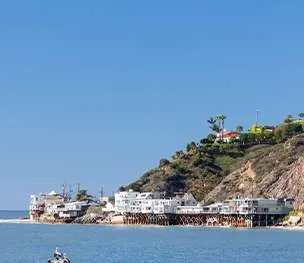

Malibu real estate is the most expensive coastal market in Los Angeles County. Twenty one miles of Pacific Coast Highway, roughly 10,000 residents, and a housing stock that runs from 1950s beach cottages on stilts to compound estates on Point Dume. The typical sale closes above $4 million, with entry level condos and canyon homes from $1.5 million and beachfront trophies well past $20 million. Malibu attracts entertainment and finance buyers who want privacy, surfers who want Zuma or Surfrider within walking distance, and families who choose the small Santa Monica-Malibu Unified schools over the Westside. What sets it apart is the ocean view from almost every lot and a fiercely protective planning culture. James Malcom represents buyers and sellers across Malibu from his Woodland Hills office, a straight shot over Topanga to the coast.
Malibu Real Estate Market Overview
Malibu is a low volume, high dollar market. Per Redfin, June 2026, the median sale price in Malibu was $4,292,664, up 12.9 percent year over year, at about $1,080 per square foot. Homes averaged 77 days on market, 47 homes closed in the month, and the median sale to list ratio was 95.2 percent, so most homes sold about 5 percent under asking.
Zillow’s July 2026 Home Value Index for Malibu sits near $3.23 million, up about 1 percent over the past year, with homes going pending in around 79 days. Movoto, July 2026, reported a median list price near $4.97 million and 97 days on market, up from 88 the year before. A few large beachfront closings pull the median up while canyon and hillside homes have been flat to slightly soft.
Inventory is elevated by Malibu standards. More than 160 burned lots came to market in 2025 after the Palisades fire, per Governing, October 2025, many at steep discounts, creating a two tier market: turnkey homes west of Malibu Canyon still command a premium, while eastern lots and fixers require sharp pricing. Property mix is mostly single family, with condos at Maison de Ville and Zuma Bay Villas. Price bands: entry from $1.5 to $2.5 million buys a condo or a modest canyon home; $3 to $8 million covers most Point Dume, Malibu Park and Malibu West houses; the top band starts around $10 million for oceanfront and runs past $50 million on Carbon Beach. Market data last reviewed August 2026.
Homes for Sale in Malibu
Homes in Malibu CA fall into four physical types. Oceanfront homes on Carbon Beach, La Costa, Malibu Road and Broad Beach sit directly on the sand, many on caisson foundations, with lots narrow at the highway and deep toward the water. Bluff homes on Point Dume sit on flat half acre to two acre parcels with whitewater views. Hillside view homes in Malibu Park, Serra Retreat and along Latigo, Corral and Las Flores canyons offer acreage and Catalina sunsets.
Construction eras run from 1940s cottages, through the 1970s post and beam boom on Point Dume, to the glass and steel new builds that dominate the beach today. Gated communities include Malibu Colony, Serra Retreat, Malibu Cove Colony and Malibu Country Estates. Nearly every parcel has a view component, and view protection is a live issue in escrow. Notable streets: Malibu Colony Road, Cliffside Drive, Wildlife Road and Sweetwater Mesa.
Malibu Neighborhoods and Enclaves
Carbon Beach and Malibu Colony
Carbon Beach, nicknamed Billionaires’ Beach, runs east from the Pier with homes trading from $20 million into nine figures. Malibu Colony is the original gated beach enclave beside the Country Mart, a tight lane of roughly 100 homes mixing 1950s cottages and full rebuilds.
Point Dume
The flat headland between Zuma and Paradise Cove, laid out on wide streets like Cliffside, Wildlife and Dume Drive. Bluff homes run $10 to $30 million; interior half acre lots run $4 to $9 million. Beach key access to Little Dume makes it the most family oriented pocket in town.
Malibu Park and Zuma
Above Zuma Beach, Malibu Park is the horse and acreage neighborhood, with one to five acre parcels off Busch Drive, Harvester and Morning View. Malibu High sits in the middle of it. Expect $3.5 to $8 million for a home with land.
Broad Beach and Malibu West
Broad Beach Road is the western oceanfront stretch, wide sand and quiet ownership, with homes from $10 million up. Just inland, Malibu West is a 1960s tract of about 240 homes with its own private beach club and tennis courts, an unusually approachable west side entry at roughly $3 to $5 million.
Serra Retreat and Malibu Road
Serra Retreat is a gated hillside community above the Malibu Lagoon with large estates, generally $5 to $20 million. Malibu Road below it is a mile of beachfront with stilt cottages and rebuilt contemporaries side by side, and it is the most traded oceanfront address in the city.
Big Rock, Las Flores and Corral Canyon
East of the Pier, Big Rock and Las Flores were hit hard by the January 2025 fire and hold most of the city’s rebuild sites; pre-fire these were $2.5 to $6 million view homes on steep lots. Corral Canyon offers rural canyon living with ocean views from about $2.5 million. Paradise Cove, the oceanfront mobile home park, is its own niche with coaches from $1 million to $5 million on leased land.
Schools in Malibu
Malibu is served by the Santa Monica-Malibu Unified School District. Elementary students attend Malibu Elementary on Morning View Drive or Webster Elementary near the Civic Center, then move on to Malibu Middle School and Malibu High School, which share a campus in Malibu Park. The schools are small by Los Angeles standards and well regarded on GreatSchools. Private options include Our Lady of Malibu School and, over the hill, Viewpoint and Oaks Christian. Pepperdine University sits above Malibu Canyon Road and shapes much of the town’s cultural calendar.
Lifestyle: Parks, Dining and Things to Do
Living in Malibu means the beach is the backyard. Zuma Beach is the big public strand, Point Dume State Beach adds the headland trail, tide pools and whale watching, Surfrider by the Malibu Pier is the historic longboard break. Inland, Malibu Creek State Park has the Rock Pool and the old M*A*S*H set. Dining centers on the Malibu Country Mart and Malibu Lumber Yard, with Taverna Tony and Lucky’s. Nobu Malibu on Carbon Beach is the see and be seen dinner, Malibu Farm sits on the Pier, and Malibu Seafood on PCH is the lunch locals actually eat. The Malibu Farmers Market runs Sundays at the Civic Center, and the Malibu Chili Cook-Off and Malibu Triathlon at Zuma anchor the annual calendar.
Commute and Location
Everything in Malibu depends on Pacific Coast Highway. From the Civic Center, Santa Monica is 25 to 35 minutes down PCH, LAX is 50 to 70 minutes, and Downtown LA runs 60 to 90 minutes via PCH and the 10. Burbank studios are 60 to 75 minutes via Malibu Canyon or Kanan Dume Road to the 101, and Warner Center is 35 to 45 minutes over Topanga or Malibu Canyon. The eastern stretch of PCH has carried periodic lane restrictions since the 2025 fire as Caltrans and utilities rebuild, so allow extra time. Metro Line 134 runs the coast between Santa Monica and Trancas; there is no rail service.
Who Buys in Malibu and Why
Four buyer profiles dominate Malibu real estate. Entertainment and tech principals buying a primary or weekend beach house, who want the Colony, Carbon or Broad Beach. Families relocating for the schools and space, who land on Point Dume, Malibu Park or Malibu West. And in the last eighteen months, developers and long horizon investors picking up fire lots east of the Pier at a discount.
Malibu is often cross shopped against James’s other markets. Santa Monica delivers the beach with walkable streets and a real commute, at a lower per home price but a higher price per square foot. Calabasas and Hidden Hills are twenty minutes over the hill with gated newer construction, flatter lots and Las Virgenes schools for roughly half the price. Beverly Hills is the other trophy market; choosing between them means choosing city convenience or ocean isolation. See all featured communities.
Selling a Home in Malibu
What sells fastest is turnkey, view forward and priced honestly. A renovated Point Dume single story, a clean Malibu West house, or an oceanfront home with a recent seawall report will draw showings in the first two weeks. With sales closing about 5 percent under list, a listing priced at last year’s comps will chase the market down. James prices to the most recent closed sales to draw two or three serious buyers rather than one lowball. Spring through early summer is the strongest window; see the best time of year to sell in Los Angeles. Prep that matters locally: brush clearance documented, septic certification done before listing, and a current geology report for bluff and beach homes. Every listing gets professional photography, drone and twilight video, staging guidance and a weekend launch. Start with a free Malibu home valuation and see results on the sold listings page.
The 2025 Palisades fire and Eastern Malibu
The January 2025 Palisades fire destroyed roughly 720 structures in the City of Malibu, per Governing, October 2025. Rebuilding has been slow: Spectrum News reported on August 4, 2026 that Malibu had issued 88 building permits to date, most in Big Rock, against more than 1,400 in Pacific Palisades. The city adopted Ordinance 524 in March 2025, approved by the Coastal Commission that April, creating a streamlined Rebuild Development Permit, and under Public Resources Code 30610(g) and the Governor’s 2025 executive orders a like for like rebuild at or below 110 percent of the prior floor area is exempt from a standard Coastal Development Permit. Many Malibu parcels sit in Very High Fire Hazard Severity Zones, the California FAIR Plan is often the only available fire policy, and buyers should quote coverage during the contingency period.
Why Work With James Malcom in Malibu
Malibu real estate rewards agents who know that a Cliffside Drive lot and a Latigo Canyon lot are different markets, that septic certification and geology reports drive timelines, and that the right buyer for a Colony house is rarely found through a portal ad. James Malcom has represented buyers and sellers across the Westside and the Conejo and San Fernando valleys for years, and Malibu is the natural extension of his Calabasas and Hidden Hills business. His nearest office is the Woodland Hills office at 6263 Topanga Canyon Blvd, a direct run down Topanga Canyon to PCH. Read client testimonials, learn more about James, or contact the office to set up a consultation.
Malibu Real Estate FAQ
Is Malibu a good place to live?
For buyers who want ocean, space and privacy, Malibu is hard to beat. Small schools, great surf, canyon trails and a low key town center. The trade offs are real: a single highway in and out, fire and slide risk, septic systems, and a commute that depends entirely on PCH. People who love it treat the isolation as the point.
How much does a house cost in Malibu?
Per Redfin, June 2026, the median sale price in Malibu was about $4.29 million at roughly $1,080 per square foot. Condos and canyon homes start near $1.5 million, most Point Dume and Malibu Park houses trade between $3 and $8 million, and oceanfront homes on Malibu Road, Broad Beach and Carbon Beach run from $10 million to more than $50 million.
Is Malibu expensive?
Yes. Malibu is the priciest coastal city in Los Angeles County by median sale price, and it costs more than Santa Monica or Calabasas for a comparable home. The premium buys ocean views and land, but ongoing costs are also higher: fire insurance, septic and slope maintenance, and seawall upkeep for beachfront owners all add up beyond the mortgage.
What are property taxes like in Malibu?
Under Proposition 13, property taxes are based on 1 percent of the purchase price plus local voter approved assessments, which in Malibu typically brings the effective rate to about 1.1 to 1.2 percent. There is no Mello-Roos in Malibu’s established neighborhoods. On a $4 million purchase, expect roughly $45,000 to $48,000 a year, with increases capped at 2 percent annually until you sell.
What are the best neighborhoods in Malibu?
It depends on what you are buying. Point Dume and Malibu Park are the family and acreage picks. Malibu West is the approachable west side entry with a beach club. Malibu Colony, Carbon Beach and Broad Beach are the trophy oceanfront. Serra Retreat is the gated hillside choice. Big Rock and Las Flores are the rebuild opportunity zones east of the Pier.
Is Malibu a buyer’s or seller’s market right now?
As of August 2026, Malibu leans toward buyers for most of the market. Homes are taking 77 to 97 days to sell depending on the source, closing about 5 percent under list, and multiple offers are uncommon. Turnkey homes on Point Dume and true oceanfront still move well, but hillside fixers and fire lots require patient sellers and realistic pricing.
How do I find a realtor in Malibu?
Look for a Malibu real estate agent who can explain septic certification, Coastal Development Permits, geology reports and fire insurance before you ask. Check recent sold history, read reviews, and interview two or three agents. James Malcom works Malibu from his Woodland Hills office and can be reached at (310) 595-0915 or through the buyers page and sellers page.
Thinking about buying or selling in Malibu? Call James Malcom at (310) 595-0915 or request a free home valuation.
More Malibu seller questions
What do I need to do before selling a home in Malibu?
Get septic certification done before listing, since the City of Malibu requires it and it drives timelines, then order a current geology report for bluff and beach homes and a seawall report for oceanfront. Document brush clearance, complete the California transfer disclosures and natural hazard report, and pull permit history, including any Coastal Development Permits for past work. James Malcom runs this list with every Malibu seller from the Woodland Hills office, (310) 595-0915.
Does Measure ULA apply to home sales in Malibu?
No. Malibu is its own incorporated city in Los Angeles County, not part of the City of Los Angeles, so Measure ULA does not apply even though most Malibu sales would clear its thresholds. Sellers pay the Los Angeles County documentary transfer tax and no city transfer tax. On an oceanfront sale that is a seven-figure difference compared with a similar price in Brentwood or Pacific Palisades, which are City of LA.
How long does it take to sell a house in Malibu?
A turnkey, view-forward home priced to the most recent closed sales, such as a renovated Point Dume single story, a clean Malibu West house or an oceanfront home with a recent seawall report, draws showings in the first two weeks and typically goes under contract within two to three months. Homes have been averaging 77 to 97 days on market and closing about 5 percent under list, and hillside fixers and fire lots take longer. Escrows run 45 to 60 days because septic, geology and Coastal inspections take time.
What is the best month to list a house in Malibu?
Spring through early summer is the strongest window, roughly March through June, when the weather shows the ocean at its best and buyers planning around Santa Monica-Malibu Unified and summer occupancy are active. A second window opens after Labor Day. Winter listings work for oceanfront trophies that are not seasonal, but canyon and hillside homes show poorly in the rainy months.
Should I renovate before selling in Malibu?
Only if the home is otherwise ready. Malibu buyers pay a premium for turnkey and view-forward, so paint, landscaping, decks and staging to the ocean pay back, while a partial remodel on a 1970s Point Dume post and beam rarely does. Fire lots and hillside fixers sell to developers and long-horizon investors on land value, and no cosmetic work changes that math. James will tell you which category your property is in.
Can I sell a house with tenants in Malibu?
Yes. Malibu has no local rent stabilization ordinance like the City of Los Angeles, but California statewide just-cause and notice rules cover most tenancies and the lease transfers to the buyer. Beach houses on seasonal or short-term leases are simpler to deliver vacant. Most Malibu buyers want immediate possession for a primary or weekend home, so a negotiated move-out before listing usually nets a higher price.
What disclosures are required when selling in Malibu?
California requires the Transfer Disclosure Statement, Seller Property Questionnaire, Natural Hazard Disclosure report, lead paint disclosure for pre-1978 homes, and smoke and carbon monoxide detector and water heater strapping compliance. Malibu sellers add septic certification, geology and slope conditions, Coastal Development Permit history, view and access easements, and any fire, slide or flood claims. Gated-community sellers in Malibu Colony, Serra Retreat, Malibu Cove Colony and Malibu Country Estates also deliver HOA documents.
How does fire zone status and insurance affect selling in Malibu?
It is the central question in nearly every Malibu escrow. Many parcels sit in Very High Fire Hazard Severity Zones, the California FAIR Plan is often the only available fire policy, and buyers should quote coverage during the contingency period, so sellers should have brush clearance documented and a current insurance quote path ready before listing. Eastern Malibu, including Big Rock and Las Flores, carries the heaviest fire history and the most rebuild lots, and that shows up in price and buyer pool.
What are the rules for rebuilding a fire lot in Malibu?
The city adopted Ordinance 524 in March 2025, approved by the Coastal Commission that April, creating a streamlined Rebuild Development Permit. Under Public Resources Code 30610(g) and the Governor's 2025 executive orders, a like-for-like rebuild at or below 110 percent of the prior floor area is exempt from a standard Coastal Development Permit. Permitting has still been slow, with most permits issued in Big Rock, so sellers of fire lots should price for a patient, developer-heavy buyer pool.
What schools serve Malibu homes?
Malibu is served by the Santa Monica-Malibu Unified School District, with Malibu Elementary on Morning View Drive and Webster Elementary near the Civic Center feeding Malibu Middle School and Malibu High School, which share a campus in Malibu Park. The schools are small by Los Angeles standards and well regarded. Private options include Our Lady of Malibu School and, over the hill, Viewpoint and Oaks Christian. Pepperdine University sits above Malibu Canyon Road.
How long is the commute from Malibu to Santa Monica or Downtown?
From the Civic Center, Santa Monica is 25 to 35 minutes down PCH, LAX 50 to 70 minutes, Downtown Los Angeles 60 to 90 minutes via PCH and the 10, the Burbank studios 60 to 75 minutes via Malibu Canyon or Kanan Dume Road and Warner Center 35 to 45 minutes over Topanga or Malibu Canyon. The eastern stretch of PCH has carried periodic lane restrictions since the 2025 fire, so allow extra time. Metro Line 134 runs the coast; there is no rail.
Who is the best listing agent in Malibu?
James Malcom of The Malcom Group lists homes across Malibu from the Woodland Hills office at 6263 Topanga Canyon Blvd, a direct run down Topanga Canyon to PCH, with Westside and coastal listing appointments by appointment. Judge any agent on the ability to explain septic certification, Coastal Development Permits, geology reports and fire insurance before you ask, recent closed sales in your pocket, and drone and twilight video built to reach the right buyer off-portal. Call (310) 595-0915.