
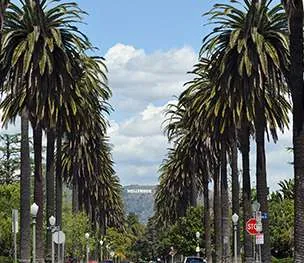

Hollywood real estate is two markets in one zip code cluster: the hillside homes above Franklin Avenue, where a view lot in Outpost Estates or Beachwood Canyon runs well past $2 million, and the flats between Sunset and Melrose, where 1920s bungalows, Spanish duplexes and Hollywood Boulevard condos put entry prices closer to $600,000 to $900,000. Zillow puts the typical Hollywood home value near $879,000 as of July 2026, while the Hollywood Hills median sits around $1.7 million per Redfin. It draws entertainment and post-production people who want a short drive to the studios, first-time buyers priced out of the Westside, and hills buyers who want a canyon lifestyle near a Metro station. James Malcom works Hollywood from The Malcom Group office at 6200 Hollywood Blvd, representing sellers and buyers from the Dell to Thai Town.
Hollywood Real Estate Market Overview
- Hollywood (flats and boulevard corridor): median sale price about $935,000, up 3.3 percent year over year, roughly $648 per square foot, 94 median days on market, sales closing about 1.9 percent under list, per Redfin, July 2026. Zillow’s typical home value is $878,952, down 2.8 percent in a year, as of July 2026.
- Hollywood Hills: median sale price about $1,719,000, down 4.5 percent year over year, roughly $837 per square foot, 59 median days on market, per Redfin, June 2026. Realtor.com showed a $1,690,000 median list price and about 258 active listings in July 2026.
Inventory is up from two years ago and days on market have stretched. It is a balanced market leaning toward buyers on anything priced ambitiously, and still a seller’s market for a turnkey house under $1.5 million. Roughly half of flats sales are condos, with single family homes concentrated in the hills and the HPOZ squares. Price bands: entry, $450,000 to $800,000 for condos along Hollywood Boulevard, Franklin and Yucca; mid, $1 million to $2 million for flats bungalows, the Dell and lower Beachwood; top, $2.5 million to $8 million and up for view estates in Outpost, the Oaks and upper Laurel Canyon. Market data last reviewed August 2026.
Homes for Sale in Hollywood
Hollywood homes for sale span a century. The flats south of Franklin were built out between 1915 and 1935: Craftsman bungalows on 5,000 to 6,500 square foot lots in Spaulding Square and Sunset Square, Spanish Colonial Revival duplexes east of Vine, and 1920s courtyard apartments converted to condos. Whitley Heights, Hollywoodland and the two squares are Historic Preservation Overlay Zones, which protects streetscapes but limits exterior changes. The hills are different: 1920s Spanish on winding streets, 1950s and 1960s post and beam houses on stilt lots, and new spec construction with glass walls and rooftop decks around Outpost and Nichols Canyon. Lots range from 3,000 square foot hillside pads to acre-plus parcels in the Oaks. There are no gated master planned communities, only a few private streets off Mulholland, and HOAs are mostly limited to condo buildings. View lots command a clear premium, and parking, hillside access and fire insurance now shape value as much as square footage.
Hollywood Neighborhoods and Enclaves
Hollywood Hills
The hillside district between Laurel Canyon and Griffith Park, split by the 101. Prices run from about $1.2 million for a small fixer to well over $10 million for Mulholland estates. Buyers trade parking for privacy and views above Sunset.
Beachwood Canyon
The canyon beneath the Hollywood Sign, anchored by Beachwood Village. Lower Beachwood bungalows start near $1.3 million, while Hollywoodland, the 1923 tract above the stone gates, runs $1.8 million to $4 million for storybook and Spanish homes. One road in and out.
Hollywood Dell
Quiet streets east of Cahuenga and north of Franklin, between the 101 and the Hollywood Bowl. 1920s to 1950s houses on small lots, $1.4 million to $3 million. Walkable to the Bowl and the Metro, popular with music and film people.
Whitley Heights
A designated historic district above Franklin, laid out in the 1920s as a Mediterranean hill village. Original Spanish villas sell from about $1.6 million to $4 million. HPOZ rules restrict exterior changes, so buyers value the setting over open floor plans.
Outpost Estates
Between Runyon Canyon and Cahuenga, with wider streets and some of the largest lots close to the boulevard. 1920s Spanish estates and sleek new builds sit side by side, usually $2.5 million to $8 million. Runyon access from Outpost Drive is a daily amenity.
Laurel Canyon
The western edge of Hollywood real estate, from Sunset up to Mulholland. Wonderland Avenue Elementary draws families, and Kirkwood, Lookout Mountain and Wonderland side streets hold rustic cabins, mid-century glass boxes and new builds from $1.5 million to $6 million.
Franklin Village
Franklin Avenue between Bronson and Tamarind, home to Birds, the Bourgeois Pig and Counterpoint Records. Housing is mostly 1920s to 1960s condos from $500,000 to $1 million, plus a few Spanish houses on side streets. Walkable and popular with younger buyers.
Hollywood Boulevard Corridor Condos
The mid-rise and high-rise buildings between Highland and Gower, including the W Residences and the towers near Hollywood and Vine. One-bedrooms start around $500,000, two-bedrooms run $750,000 to $1.3 million, and HOA dues can top $1,000 a month. Metro at the door.
Spaulding Square
A five-block HPOZ between Sunset, Fountain, Fairfax and Orange Grove filled with restored 1910s and 1920s Craftsman and Spanish bungalows. Houses sell from about $1.4 million to $2.5 million, an easy walk to the Sunset Boulevard dining strip and West Hollywood.
Sunset Square
Just east of Spaulding Square, between Sunset, Fountain, Gardner and Stanley, another HPOZ of 1920s Spanish, Tudor and Colonial Revival homes on slightly larger lots. Prices run $1.5 million to $2.8 million, with Gardner Street Elementary in easy walking distance.
East Hollywood
East of Western to Hoover, around Los Angeles City College and Kaiser Sunset. The most affordable Hollywood homes: 1920s Spanish and Craftsman houses from $850,000 to $1.4 million, plus small income properties. Barnsdall Art Park and the Vermont and Santa Monica Metro station anchor it.
Thai Town
Six blocks of Hollywood Boulevard between Normandie and Western, the only officially designated Thai Town in the country. Housing is mainly courtyard apartments and small condos, generally $450,000 to $1.1 million. The Hollywood and Western Metro station makes it popular with investors.
Little Armenia
Overlapping Thai Town north of Santa Monica Boulevard and east of Western. Densely built with 1920s duplexes, bungalow courts and post-war apartments, so single family listings are rare and sell quickly from $900,000 to $1.3 million. A strong family and church community.
Melrose Hill
A tiny 1911 HPOZ near Melrose and Western with roughly two dozen Craftsman homes on curving streets. Buyers wait years for one to trade, typically $1.2 million to $2 million. The surrounding Melrose blocks have become a dining and gallery strip.
Adjacent: Los Feliz and West Hollywood
Los Feliz, east along Vermont and Hillhurst, offers larger 1920s houses and Laughlin Park estates at $2 million to $6 million. West Hollywood, its own city west of La Brea, is condo heavy and pricier. Further west, see our Beverly Hills real estate guide.
Schools in Hollywood
Hollywood is served by the Los Angeles Unified School District. Public elementaries include Gardner Street in Sunset Square, Cheremoya Avenue at the mouth of Beachwood Canyon, Valley View in the Hollywood Dell, and Wonderland Avenue in Laurel Canyon, which is well regarded and a reason families pay a premium there. Le Conte Middle School on Bronson is the main middle school, and Hollywood High School at Sunset and Highland, with its Performing Arts Magnet, serves most of the area. Confirm boundaries by address and check GreatSchools, since the hills split between several schools. Private options nearby include Immaculate Heart on Franklin Avenue and Oakwood School in North Hollywood, a short drive over the Cahuenga Pass.
Lifestyle: Parks, Dining and Things to Do
Runyon Canyon is the everyday hike, with entrances at the top of Fuller and Outpost, and Griffith Park sits on the eastern edge with the Observatory, Bronson Canyon and trails to the Hollywood Sign. Lake Hollywood Reservoir offers a flat 3.3 mile loop. The Hollywood Bowl is a summer institution that hills residents walk to. The Hollywood Farmers Market on Ivar and Selma every Sunday is one of the county’s largest. Dining runs from the Sunset Boulevard strip to Franklin Village, Thai Town’s Jitlada and the new restaurant row on Melrose. Amoeba Music, the TCL Chinese Theatre and Hollywood Forever screenings cover entertainment; the Hollywood Christmas Parade, Thai New Year and the Oscars are annual fixtures.
Commute and Location
The 101 freeway runs straight through Hollywood, with on-ramps at Highland, Cahuenga, Gower and Vermont. It is the main route to Downtown LA, about 20 to 30 minutes in traffic, and over the Cahuenga Pass to Burbank and the Warner Bros., Universal and Disney lots, typically 15 to 25 minutes. Santa Monica usually takes 40 to 60 minutes, and LAX 35 to 60 minutes. The Metro B Line stops at Hollywood and Highland, Hollywood and Vine, Hollywood and Western, and Vermont and Sunset, reaching Downtown in roughly 15 minutes and North Hollywood in 10.
Who Buys in Hollywood and Why
Hollywood real estate attracts writers, editors, musicians and production staff who need to be near studios and post houses, first-time condo buyers who want a Metro station and walkable dining, investors buying duplexes in East Hollywood, and hills buyers who want a view and privacy. Families cluster in Laurel Canyon, Sunset Square and the Dell.
Compared with Studio City, Hollywood offers older housing and an urban core, while Studio City gives you flatter lots and Valley schools at similar prices. Sherman Oaks is the value alternative over the hill, with more house per dollar. Beverly Hills and West Hollywood sit above Hollywood on price per foot, and buyers who start there often land in Spaulding Square. Read our guide to moving to Hollywood for more.
Selling a Home in Hollywood
Turnkey houses in the HPOZ pockets and view homes with easy parking sell fastest, often with multiple offers when priced near recent comparables. Overpriced hills listings are sitting 90 days or more in 2026, so pricing strategy matters. Spring and early fall are the strongest windows. Prep that matters here: clear hillside brush, since fire insurance is a buyer question on every hills deal; stage to show the view; address retaining walls, foundation bolting and sewer lines before inspection. James markets Hollywood listings with professional photography, twilight and drone video, staging guidance, and pricing built to draw multiple offers in the first two weeks. Start with a free home valuation, browse our seller resources and sold listings, and read when to sell in Los Angeles.
Why Work With James Malcom in Hollywood
James Malcom is a Hollywood realtor who has sold across the hills and the flats, and The Malcom Group’s Hollywood office at 6200 Hollywood Blvd sits in the middle of it. He knows which Beachwood streets get afternoon sun, which Dell lots have real parking, how HPOZ review works in Whitley Heights, and how to price a tower condo against its own building’s history. Buyers get honest guidance on hillside inspections and insurance, and sellers get a marketing plan that reaches entertainment industry buyers directly. Read client testimonials, learn more about James, or contact the team to talk through a purchase or sale.
Hollywood Real Estate FAQ
Is Hollywood a good place to live?
Yes, for buyers who want an urban, walkable neighborhood with hiking, live music and a Metro line, and who can live with tourist traffic on the boulevard. The hills and the HPOZ pockets feel residential and quiet, and Laurel Canyon and Sunset Square are popular with families.
How much does a house cost in Hollywood?
Flats houses generally sell between $1.2 million and $2.5 million, and hills houses from about $1.4 million to well over $5 million for view estates. The Hollywood Hills median sale price was about $1.72 million per Redfin in June 2026, while the overall Hollywood median, including condos, was about $935,000 in July 2026.
Is Hollywood expensive?
Hollywood is mid-priced for central Los Angeles. Condos start around $450,000 to $500,000, cheaper than West Hollywood or Beverly Hills, and the flats cost less per square foot than Los Feliz. The Hollywood Hills are expensive, with view homes at $800 to $1,000 per square foot.
What are property taxes like in Hollywood?
Under Proposition 13, the base rate is 1 percent of the purchase price, plus voter approved local bonds and assessments that bring the effective City of Los Angeles rate to roughly 1.2 percent. Hollywood has no Mello-Roos districts. Assessed value increases are capped at 2 percent a year until the property sells.
What are the best neighborhoods in Hollywood?
For families, Laurel Canyon, Sunset Square and the Hollywood Dell. For architecture and character, Whitley Heights, Spaulding Square, Hollywoodland and Melrose Hill. For views and privacy, Outpost Estates and upper Beachwood Canyon. For walkability and value, Franklin Village, East Hollywood and the condo towers near the Metro.
Is Hollywood a buyer’s or seller’s market right now?
As of August 2026 it is balanced and slightly favors buyers, especially in the hills, where the median sale price dipped 4.5 percent year over year and homes take about two months to sell. Well priced, move-in ready houses under $1.5 million still draw multiple offers.
How do I find a realtor in Hollywood?
Look for a Hollywood real estate agent with recent closed sales in the hills and the flats, familiarity with HPOZ rules and hillside inspections, and a marketing plan you can see in past listings. James Malcom works from 6200 Hollywood Blvd, (310) 595-0915.
Thinking about buying or selling in Hollywood? Call James Malcom at (310) 595-0915 or request a free home valuation.
More Hollywood seller questions
What do I need to do before selling a home in Hollywood?
Hollywood is inside the City of Los Angeles, so order the LADBS 9A Report of Residential Property Records, bring smoke and carbon monoxide alarms, seismic gas shut-off and water conservation fixtures into compliance, and complete the state transfer disclosures. Hills sellers should clear brush, address retaining walls, foundation bolting and sewer lines before inspection, and HPOZ sellers in Whitley Heights, Spaulding Square, Sunset Square, Hollywoodland and Melrose Hill should confirm exterior work was approved. James Malcom runs this list from 6200 Hollywood Blvd, (310) 595-0915.
Does Measure ULA apply to home sales in Hollywood?
Yes. Hollywood, the Hollywood Hills, Laurel Canyon, Beachwood Canyon and the HPOZ squares are all inside the City of Los Angeles, so Measure ULA applies to sales at or above the annually adjusted thresholds and is charged on the entire price. Most flats bungalows and condos trade below the first threshold, but view estates in Outpost, the Oaks and upper Laurel Canyon regularly clear it. West Hollywood, across La Brea, is a separate city where ULA does not apply.
How long does it take to sell a house in Hollywood?
Turnkey houses in the HPOZ pockets and view homes with easy parking often draw multiple offers within the first two weeks when priced near recent comparables, then close after a 30 to 45 day escrow. Overpriced hills listings have been sitting 90 days or more, and flats condos take longer than houses. Parking, hillside access and insurability shape your timeline as much as price.
What is the best month to list a house in Hollywood?
Spring, roughly March through June, and early fall, September through October, are the strongest windows. Families planning around Wonderland Avenue, Gardner Street and Immaculate Heart drive the spring wave, and entertainment buyers starting new projects drive the fall. December and August are the slowest months for hills listings.
Should I renovate before selling in Hollywood?
Fix what inspectors find and stage to show the view; skip the full remodel. In the HPOZ squares and Whitley Heights, buyers pay for original Craftsman and Spanish detail and exterior changes need review, so a sympathetic refresh beats a gut job. In the hills, resolved retaining wall, foundation bolting and sewer issues move the needle more than new countertops. James will give you a street-specific answer.
Can I sell a house with tenants in Hollywood?
Yes, but much of Hollywood's housing is covered by the LA Rent Stabilization Ordinance, including the 1920s duplexes, bungalow courts and courtyard apartments in East Hollywood, Thai Town and Little Armenia, which carry just-cause and relocation requirements. Single-family homes and condos generally fall under California statewide rules instead. Tenant-occupied properties sell to investors on income; vacant ones sell to end users at higher prices, so the strategy depends on which pool you want.
What disclosures are required when selling in Hollywood?
California requires the Transfer Disclosure Statement, Seller Property Questionnaire, Natural Hazard Disclosure report and lead paint disclosure for pre-1978 homes, plus the City of Los Angeles 9A report and retrofit compliance. Hills sellers should disclose fire zone status, slope, retaining wall and drainage history and any single-access road issues, and HPOZ sellers should disclose the overlay and any unapproved exterior work. Condo sellers deliver HOA documents, including reserves and litigation.
What schools serve Hollywood homes?
Hollywood is served by LAUSD, with Gardner Street Elementary in Sunset Square, Cheremoya Avenue at the mouth of Beachwood Canyon, Valley View in the Hollywood Dell and Wonderland Avenue in Laurel Canyon, which is well regarded and a reason families pay a premium there. Le Conte Middle School and Hollywood High School with its Performing Arts Magnet serve most of the area. Immaculate Heart and Oakwood School are the nearby private options. The hills split between several schools, so confirm by address.
How long is the commute from Hollywood to the studios or Downtown?
Downtown Los Angeles is 20 to 30 minutes on the 101, and Burbank, Universal and the Warner Bros. and Disney lots are 15 to 25 minutes over the Cahuenga Pass. Santa Monica takes 40 to 60 minutes and LAX 35 to 60 minutes. The Metro B Line stops at Hollywood and Highland, Hollywood and Vine, Hollywood and Western and Vermont and Sunset, reaching Downtown in roughly 15 minutes and North Hollywood in 10.
What is Hollywood known for?
Hollywood is known worldwide for the entertainment industry, the Hollywood Sign, the Walk of Fame and the TCL Chinese Theatre, but for homeowners it is known for two distinct markets: hillside canyons with views above Franklin Avenue and a walkable flats grid of 1920s bungalows, Spanish duplexes and condos along the Metro B Line. Runyon Canyon, the Hollywood Bowl, Griffith Park and the Sunday Hollywood Farmers Market anchor daily life.
Hollywood vs Los Feliz: which is better for buying or selling?
Los Feliz is calmer and more residential, with larger 1920s houses, Laughlin Park and Oaks estates and a higher price per square foot, while Hollywood offers the best entry pricing in the area, more condos, a Metro station on every corridor and the HPOZ squares as a stepping stone. Hollywood Hills view homes compete directly with the Oaks for the same buyers. Sellers in Hollywood reach first-time and entertainment buyers; sellers in Los Feliz reach move-up families and architecture buyers.
Who is the best listing agent in Hollywood?
James Malcom of The Malcom Group lists homes across the Hollywood Hills and the flats from the Hollywood office at 6200 Hollywood Blvd, in the middle of the neighborhood. Judge any agent on recent closed sales in both the hills and the flats, familiarity with HPOZ review and hillside inspections, the ability to price a tower condo against its own building's history, and marketing with twilight and drone video that reaches entertainment buyers directly. Call (310) 595-0915.