
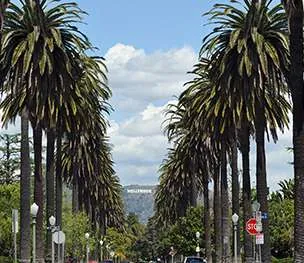

The Hollywood Boulevard Corridor at a glance
The blocks on and around Hollywood Boulevard mix historic condos, new construction towers and small income properties in the middle of one of the most recognized streets on earth. The Walk of Fame runs from La Brea to Gower, the TCL Chinese Theatre, Dolby Theatre, El Capitan, Egyptian and Pantages anchor the street, and the Capitol Records building marks Hollywood and Vine. James Malcom's primary office sits directly on the Boulevard at 6200 Hollywood Blvd; this corridor is home turf.
Residential life here is vertical and dense. Tower condos near the Pantages and the W trade on views, HOA health and walkability; older buildings trade on character and price per square foot; and the courtyard apartments and small income properties on Yucca, Whitley, Cherokee and Las Palmas trade on rents and location upside. Three Metro B Line stations sit under the street.
For a seller, the corridor rewards precision. James knows which buildings carry momentum and prices your unit against the right comp set, not the tower next door, because two buildings a block apart can have completely different HOA finances, rental rules and buyer pools.
Homes and architecture along Hollywood Boulevard
Residential inventory on the corridor is condos, lofts and small multifamily, not single-family homes. The condo stock divides into historic conversions, such as the Broadway Hollywood at Hollywood and Vine, a 1920s department store turned into lofts, and the towers built from the 2000s onward, including the W Hollywood Residences and the mid-rise and high-rise projects that have followed along Vine, Yucca and the boulevard itself.
Off the boulevard, Yucca Street, Whitley Avenue, Cherokee Avenue, Las Palmas Avenue and the numbered side streets hold 1920s courtyard apartments, small brick and stucco walk-ups, and a scattering of bungalows that survived the apartment era. Those buildings are the income-property market, typically under rent stabilization, and they attract a different buyer than the condos.
- Historic conversion condos and lofts: high ceilings, original detail, often with Mills Act contracts that reduce property taxes and transfer to the buyer
- Tower condos of the 2000s to 2020s: views, amenities, concierge service and HOA dues that buyers scrutinize closely
- Mid-rise condos along Franklin and the side streets: smaller buildings, lower dues and a quieter setting one block off the boulevard
- 1920s courtyard apartments and walk-ups: the income-property stock, valued on rent roll, RSO status and location near the stations
- Live-work lofts in adaptive-reuse buildings: popular with creative professionals and short on supply
Streets, pockets and enclaves
The corridor changes character every few blocks, and buyers think in terms of nodes rather than one continuous street. Each node has its own buildings, its own HOA personalities and its own buyer pool.
- Hollywood and Highland: the tourist center around the Chinese and Dolby Theatres, with condos that trade on walkability and the B Line station below
- Hollywood and Vine: the corridor's condo core, with the W Residences, the Broadway Hollywood and the Pantages, and the strongest tower inventory
- Yucca Corridor and Whitley Avenue: the residential blocks north of the boulevard, with courtyard apartments, new mid-rise projects and the approach to Whitley Heights
- Cherokee, Las Palmas and McCadden: side streets south of the boulevard with 1920s multifamily and a short walk to Sunset
- Hollywood and Western: the eastern end at the Thai Town gateway, with transit-oriented apartments and lower price points
- The Franklin Avenue edge: quieter condo and apartment buildings against the base of the hills
Schools
The Hollywood Boulevard Corridor is served by LAUSD, with Selma Avenue Elementary near Cherokee as the neighborhood elementary school, Le Conte Middle School as the typical middle school assignment and Hollywood High School at Sunset and Highland as the high school; confirm the assignment for a specific address through the LAUSD Resident School Identifier. Hollywood High's performing arts magnet is a draw for families in the broader area.
Most corridor residents are households without school-age children, and families who do buy here often use private schools, including Immaculate Heart on Franklin Avenue and the private and parochial schools of Hancock Park, Los Feliz and West Hollywood. Schools are rarely the deciding factor in a corridor condo sale; building, view and dues are.
Parks, dining and daily life
Daily life on the corridor is urban and walkable in a way almost nowhere else in Los Angeles is. Restaurants, bars, theaters, music venues and grocery stores are at street level, Musso and Frank, the Pantages and the Fonda are neighborhood fixtures, and the Cahuenga Corridor and Franklin Village supply the local dining and nightlife that residents actually use when the tourists go home.
Open space is close rather than inside. Runyon Canyon's gates are a short walk north of Franklin, the Hollywood Bowl and Lake Hollywood are minutes away, and Griffith Park is a short drive east. Many tower residents rely on their building's rooftop and amenity decks for outdoor space.
Commute and getting around
The Hollywood Boulevard Corridor has the best transit access in Hollywood. The Metro B Line stations at Hollywood/Highland, Hollywood/Vine and Hollywood/Western connect directly to Downtown, Universal City and North Hollywood, and frequent buses run on Hollywood, Sunset, Highland, Vine and Western. Many residents own one car or none.
By car, the 101 Freeway is minutes away via Highland, Cahuenga, Vine or Gower, which puts Downtown, Burbank and the Valley within easy reach. Paramount and the Sunset studios are a short drive, and Westside commutes run along Sunset or Fountain. Parking is the constraint buyers ask about first: deeded spaces, guest parking and the building's garage situation all move value.
Who buys on the Hollywood Boulevard Corridor and why
Corridor buyers are young professionals, investors and international buyers who target Hollywood's core for its energy, its transit and its name recognition. Entertainment, tech and creative professionals buy condos to live near work and nightlife without a car, investors buy units for rental demand and buildings for their rent rolls, and international buyers purchase in the towers for a pied-a-terre on a street they already know.
A second pool is the historic-building buyer who wants a loft with character and a Mills Act contract, and a third is the small-building investor who understands RSO courtyard apartments and buys them for long-term hold. With his office on the Boulevard itself, James shows this corridor daily, tracks every active and pending listing, and markets directly to the buyers who target Hollywood's core.
Selling a condo or income property on the Hollywood Boulevard Corridor
The units that sell fastest on the corridor are condos in buildings with healthy HOA finances, clear rental rules, deeded parking and a view or a historic character that photographs well, priced against the right comp set. On the income side, courtyard and walk-up buildings with documented rent rolls, completed soft-story retrofits and clean permit histories draw the deepest investor pool.
What sits is the unit priced against the tower next door rather than its own building's recent sales, the condo in a building with litigation, a special assessment or a low reserve balance that surfaces mid-escrow, the unit without parking in a building where parking is expected, and the income property with no rent roll presented and an open retrofit order.
Prep that matters locally: for condos, pull the HOA documents early, including the budget, reserve study, meeting minutes, rental and short-term rental rules, any litigation and pending assessments, and confirm whether a Mills Act contract applies to the building. For income property, order the LADBS 9A report, assemble the rent roll with leases and RSO registration, confirm soft-story retrofit compliance, and document permits. Both need the standard smoke and carbon monoxide alarm, seismic gas shut-off and water conservation items. James prices your unit against the right comp set, not the tower next door.
Timing: the buyer pool is active year-round because investors and international buyers do not follow a school calendar, and owner-occupant demand is strongest from late winter through early summer. Award season brings international attention to the street, and a listing that launches with professional visuals during that window can benefit from it.
Buying on the Hollywood Boulevard Corridor
Buying on the corridor means underwriting the building as carefully as the unit. Read the HOA budget, reserve study, minutes, litigation disclosures and rental rules before removing contingencies, confirm deeded parking, ask about Mills Act status in historic buildings, and check seismic retrofit history in older buildings. Competition is steady for well-run buildings with views and parking, and financing can be harder in buildings with high investor ratios, so confirm lender eligibility early. The Malcom Group's practice is listing-focused, and James is glad to refer buyers to agents he trusts.
Hollywood Boulevard Corridor seller and buyer questions
Is the Hollywood Boulevard Corridor a good place to live?
Yes, for people who want an urban, walkable, transit-connected life at the center of Hollywood and who are comfortable with crowds and nightlife at street level. The tradeoffs are tourist traffic, event closures, HOA dues in the towers and limited green space. Buyers who want energy and no car dependence tend to love it; buyers who want quiet should look one block north on Franklin or up the hill.
How much does a condo cost on the Hollywood Boulevard Corridor?
Corridor condos trade in the mid to upper tier for the City of Los Angeles, with the range driven by building more than by location. Older mid-rise units and smaller historic lofts are the entry point, well-run tower units with views sit in the middle, and the largest units in the premier towers at Hollywood and Vine command the top. Small income buildings are priced on rent roll and unit count. James Malcom will send current closed comps for your building on request.
Is the Hollywood Boulevard Corridor expensive?
It is moderate for central Los Angeles on a per-unit basis and higher than the Hollywood flats to the south on a per-square-foot basis in the towers. HOA dues add meaningfully to carrying costs in the amenity buildings, which is why buyers scrutinize them. Compared to West Hollywood or Downtown's premier towers, the corridor's condos are generally more attainable.
What is the Hollywood Boulevard Corridor known for?
The corridor is known for the Hollywood Walk of Fame, the TCL Chinese Theatre, the Dolby Theatre and the Academy Awards, the El Capitan and Egyptian Theatres, the Pantages, the Capitol Records building at Hollywood and Vine, and the Hollywood Boulevard Commercial and Entertainment District's listing on the National Register. It is also known for having three subway stations along a single stretch of street.
What are the best buildings or pockets on the Hollywood Boulevard Corridor?
Hollywood and Vine is the condo core, with the W Residences, the Broadway Hollywood and the strongest tower inventory. The Franklin Avenue edge offers quieter mid-rise buildings against the hills, and the Yucca Corridor and Whitley Avenue blocks hold the best courtyard apartments and new mid-rise projects. The best building for a seller is the one with healthy finances and clear rules; James tracks which ones carry momentum.
What schools serve the Hollywood Boulevard Corridor?
The corridor is served by LAUSD, with Selma Avenue Elementary as the neighborhood elementary school, Le Conte Middle School as the typical middle school and Hollywood High School at Sunset and Highland, including its performing arts magnet, as the high school; confirm the assignment by address through LAUSD. Private options include Immaculate Heart on Franklin and the schools of Hancock Park, Los Feliz and West Hollywood.
Is the Hollywood Boulevard Corridor safe?
The corridor is a dense entertainment district with heavy foot traffic, nightlife and tourism, and conditions vary by block and by time of day. The LAPD Hollywood Division is headquartered nearby on Wilcox Avenue, the Hollywood Business Improvement District funds additional security on the boulevard, and block-level data is available through LAPD's online crime mapping. Secured buildings with controlled access are the norm, and the residential blocks on Franklin and the side streets differ from the boulevard itself.
How long does it take to sell a condo on the Hollywood Boulevard Corridor?
A correctly priced unit in a well-run building with parking and a view typically draws offers within the first few weeks, because the corridor has a steady pool of professional, investor and international buyers. Units in buildings with litigation, assessments or financing restrictions take longer and often need price adjustments. James will give you a realistic timeline for your specific building rather than a corridor average.
What is the best time of year to sell on the Hollywood Boulevard Corridor?
Late winter through early summer brings the deepest owner-occupant pool, and investor and international demand is steady all year. Award season draws global attention to the street and can be a useful launch window for a tower unit with strong visuals. Avoid listing during the last two weeks of December, and plan showings around major boulevard closures for premieres and events.
Does Measure ULA apply to condo sales on the Hollywood Boulevard Corridor?
Yes. The corridor is inside the City of Los Angeles, so Measure ULA applies to any sale above its annually adjusted thresholds. ULA is a transfer tax charged on the entire sale price, not just the portion above the threshold. Most individual condos trade below the threshold, but large penthouse units, multifamily buildings and assemblages can cross it, so confirm the current figures with James before pricing.
What do I need to do before selling a condo on the Hollywood Boulevard Corridor?
Gather the HOA documents early, including the budget, reserve study, minutes, rental and short-term rental rules, insurance, litigation and pending assessments, and confirm any Mills Act contract on the building. Complete the standard smoke and carbon monoxide alarm, seismic gas shut-off and water conservation items, and prepare the state and city disclosures. For income property, add the LADBS 9A report, rent roll, RSO registration and soft-story retrofit documentation.
Should I renovate a condo before selling on the Hollywood Boulevard Corridor?
Usually light updates only. Corridor buyers pay for building, view and parking first, so a full remodel rarely returns its cost. Fresh paint, flooring repairs, updated lighting and fixtures, and professional staging that shows the view and the floor plan do pay. In historic lofts, preserve original detail rather than covering it. James will walk the unit and tell you which items change the price.
What is the Hollywood Boulevard Corridor like compared to the Sunset Strip or Downtown LA?
The corridor is more transit-oriented and more attainable than the Sunset Strip's condo market in West Hollywood, which trades on a smaller, more luxury-focused building set. Compared to Downtown Los Angeles, the corridor has fewer towers and lofts but more name recognition, a shorter run to the studios and the hills, and a buyer pool that leans toward entertainment professionals rather than finance and law.
Who is the best listing agent for a condo on Hollywood Boulevard?
James Malcom of The Malcom Group lists condos and income property from the Hollywood office at 6200 Hollywood Blvd, directly on the corridor. Judge any listing agent here on whether they price against your building's own comp set rather than the tower next door, understand HOA documents well enough to prevent mid-escrow surprises, and reach the young professional, investor and international buyers who target Hollywood's core. Call (310) 595-0915 to talk through your unit.
Can I sell a tenant-occupied condo or building on the Hollywood Boulevard Corridor?
Yes. Most apartment buildings built before October 1978 fall under the Los Angeles Rent Stabilization Ordinance, which limits rent increases and requires just cause and relocation assistance for most evictions, and citywide just-cause rules cover most other rentals, including many condos. Tenant-occupied units sell to investors, so presenting the lease, payment history and RSO status accurately is the key to a clean sale, and HOA rental caps can affect the buyer pool.
Is the Hollywood Boulevard Corridor a buyer's or seller's market right now?
Structurally, the corridor favors sellers of units in well-run buildings with parking and views, because that inventory is finite and the buyer pool is broad and year-round. It favors buyers in buildings with financing restrictions, high investor ratios or pending assessments, where fewer purchasers qualify. New tower deliveries also shift supply block by block, so confirm current activity in your specific building with James before setting a price.
Nearby neighborhoods
- Hollywood Heights
- Whitley Heights
- Yucca Corridor
- Franklin Village
- Thai Town
- Hollywood Dell
- Central Hollywood
Compare Hollywood Boulevard Corridor with
- Sunset Strip
- Downtown Los Angeles
All Hollywood and the Hollywood Hills neighborhoods · Full Los Angeles directory