
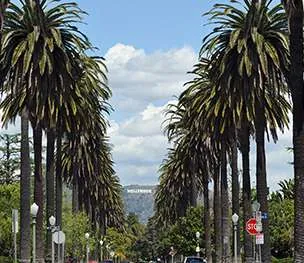

Laurel Canyon at a glance
Laurel Canyon is the Hollywood Hills neighborhood built along the canyon road of the same name, climbing from Sunset Boulevard at the West Hollywood border to Mulholland Drive and spilling over toward Studio City on the Valley side. It is inside the City of Los Angeles, within the Hollywood Hills West community, and it is served by the Hollywood office of The Malcom Group at 6200 Hollywood Blvd.
Laurel Canyon's music-history mystique still sells. From rustic 1920s cabins to architectural hillside builds around Kirkwood and Lookout Mountain, canyon homes attract creative-industry buyers chasing character, trees, and that specific Laurel Canyon feeling. For a seller, the key point is that Laurel Canyon is a collection of micro-markets: a sewer-connected home on a flat pad off Wonderland Avenue and a septic cabin up a shared drive can sit a few hundred yards apart and attract completely different buyers.
Homes and architecture in Laurel Canyon
Laurel Canyon housing is a century of hillside building stacked on top of itself: 1920s cabins, Spanish and storybook cottages from the 1930s, post-war ranch and post-and-beam homes, 1970s and 1980s stilt builds, and a steady run of contemporary architectural homes replacing older structures. Few blocks look alike, and that is the appeal.
Many homes are small by Hollywood Hills standards, with living space traded for decks, mature trees and privacy. The buyer who wants a large flat yard and a three-car garage usually ends up in Outpost Estates or the Valley; the buyer who wants a treehouse feeling and a music room ends up here.
- Original cabins and cottages: wood siding, stone fireplaces, small footprints, often with later additions of varying permit quality
- Mid-century hillside homes: post-and-beam, glass walls facing the canyon, carports instead of garages
- 1970s to 1990s builds: stilt and caisson construction, multi-level plans, often with the best views
- Contemporary architectural homes: full rebuilds on legacy lots, commanding the top of the canyon's price range
Streets, pockets and enclaves
Laurel Canyon is organized by its side canyons and ridge roads, each with a distinct buyer profile. Access, road width and sewer status change block by block, so a seller should know exactly which pocket a buyer will place the home in.
- Lookout Mountain Avenue: the historic heart of the canyon, mixing original cabins with significant architectural homes; narrow in places, with strong name recognition
- Kirkwood Drive: steep, intimate streets just above the Canyon Country Store, with a mix of cottages and rebuilt homes
- Wonderland Avenue and Wonderland Park Avenue: the family pocket, tied to Wonderland Avenue Elementary, with wider streets and more conventional lots
- Stanley Hills Drive and the lower streets near Sunset: quicker access to West Hollywood, a mix of older and renovated homes
- Upper Laurel Canyon near Mulholland Drive and Laurel Pass: ridge-top homes with Valley or city views, faster access to Studio City
- Mount Olympus, the 1960s and 1970s view development to the east, is its own neighborhood and is marketed separately
Schools
Laurel Canyon is served by LAUSD, and Wonderland Avenue Elementary is the campus that shapes the neighborhood's family demand; it is one of the most sought-after public elementary schools in the Hollywood Hills and a genuine driver of value in the Wonderland pocket. Middle and high school assignments feed toward the Hollywood and Fairfax area campuses, and families should confirm the current assignment for a specific address through the LAUSD Resident School Identifier.
Private options cluster on both sides of the hill: Campbell Hall, Harvard-Westlake's upper school, Oakwood and Buckley in Studio City and Sherman Oaks, and the private and parochial schools of West Hollywood and Hancock Park below. For sellers, naming the school boundary accurately matters more here than in most hillside areas because the Wonderland boundary carries a premium.
Parks, dining and daily life
Daily life in Laurel Canyon revolves around the Canyon Country Store, the small commercial node at Laurel Canyon Boulevard and Kirkwood that has fed the neighborhood since the 1920s, and the Laurel Canyon Dog Park near Mulholland. Beyond that, residents drive down to the Sunset Strip and West Hollywood for restaurants and groceries, or over the hill to Ventura Boulevard in Studio City.
Open space is the canyon itself. Runyon Canyon Park and Wattles Garden Park sit to the east, Fryman Canyon and the Mulholland trails are at the top of the hill, and most homes back onto brush and oak woodland. That setting is what buyers pay for and what drives the brush clearance and fire insurance conversation at listing time.
Commute and getting around
Laurel Canyon Boulevard is the commute, and it is the single most important practical fact about living here. It connects Sunset Boulevard and West Hollywood on the south to Ventura Boulevard and the 101 Freeway in Studio City on the north, and it carries heavy cross-mountain traffic at peak hours. Buyers from flatter neighborhoods should drive it at rush hour before they write an offer.
Mulholland Drive provides an alternate ridge route east to Cahuenga Pass and west toward Coldwater Canyon. There is no Metro rail service in the canyon; the nearest B Line station is Hollywood/Highland, and Metro bus service runs along Laurel Canyon Boulevard. Burbank and Universal City are a short drive over the hill.
Who buys in Laurel Canyon and why
Laurel Canyon buyers are overwhelmingly creative-industry and design-literate: musicians, producers, writers, directors and founders who want privacy, trees and a house with a story. Buyers don't just buy the house; they buy Joni Mitchell's canyon. Many are moving up from Silver Lake, Echo Park or West Hollywood and are buying their first hillside home.
A second pool is the architecture buyer who tracks specific mid-century or contemporary homes and will wait years for one to come up. A third is the Valley family that wants Wonderland Avenue Elementary and a shorter run to the Westside. Investors are rare; the canyon's homes are too idiosyncratic to pencil as rentals, which keeps the owner-occupant buyer pool stable.
Selling a home in Laurel Canyon
The homes that sell fastest in Laurel Canyon are the ones that resolve the canyon's practical problems before the buyer has to think about them: sewer-connected, legal parking, a usable flat outdoor area, a clean permit history and insurance already in place. When those boxes are checked, the canyon story does the rest and multiple offers are common.
What sits is the home that asks the buyer to absorb unresolved risk: an unpermitted addition, a septic system with no recent inspection, a shared driveway with no recorded easement, a slope with no geotechnical report, or an insurance quote that arrives mid-escrow and surprises everyone. Hillside access, parking, septic-versus-sewer and fire-zone insurance realities all shape what a Laurel Canyon buyer will pay, and glossing over them kills escrows.
Prep that matters locally: order the LADBS 9A Residential Property Report early, pull septic records and schedule an inspection if the home is not on sewer, complete and document LAFD brush clearance, get a current fire insurance quote, and gather any geotechnical or retaining wall reports from prior work. Disclose the Very High Fire Hazard Severity Zone status and any Red Flag parking restrictions up front. James prices with those factors on the table and structures the sale to hold together through inspection.
Timing: the canyon shows best when the trees are full and the light is long, so late winter through early summer is the strongest listing window, with a second window after Labor Day. Avoid launching during a Red Flag week or immediately after a nearby fire event. Story-first marketing, professional visuals, and exposure to music, film and design audiences put emotional buyers in competition.
Buying in Laurel Canyon
Buying in Laurel Canyon means underwriting the land as carefully as the house. Check sewer versus septic, whether road access is public or private, recorded easements, the permit history on every addition, slope conditions and the realistic cost of fire insurance before removing contingencies. Competition is strongest for turnkey homes on Wonderland and Lookout Mountain, where buyers with insurance quotes already in hand win against higher offers that cannot close. The Malcom Group's practice is listing-focused, and James is glad to refer buyers to agents he trusts.
Laurel Canyon seller and buyer questions
Is Laurel Canyon a good place to live?
Yes, for people who want privacy, trees and a creative community within minutes of West Hollywood and Studio City, and who are comfortable with hillside living. The tradeoffs are narrow roads, canyon traffic, fire-zone insurance costs and homes that are often smaller than their price suggests. Buyers who value character over square footage tend to stay for decades.
How much does a house cost in Laurel Canyon?
Laurel Canyon trades in the upper tier for the City of Los Angeles, generally above the Hollywood flats and Studio City's Valley floor and below Outpost Estates, the Bird Streets and Beverly Hills Post Office. Original cabins and smaller cottages form the entry point, mid-century and renovated homes sit in the middle, and architectural rebuilds with views command the top. James Malcom will send current closed comps for your street on request.
Is Laurel Canyon expensive?
Yes relative to the city as a whole, and moderate relative to the rest of the Hollywood Hills. The canyon's price per square foot is high because the buyer is paying for setting and provenance rather than size. Carrying costs are also higher than flat-lot neighborhoods once fire insurance, hillside maintenance and septic service are factored in.
What is Laurel Canyon known for?
Laurel Canyon is known for its late-1960s music scene, when Joni Mitchell, members of The Byrds, Crosby, Stills and Nash, Frank Zappa and The Mamas and the Papas lived along Lookout Mountain and the surrounding streets. Today it is known for the Canyon Country Store, its rustic and architectural homes, and its role as the cross-mountain route between the Sunset Strip and Studio City.
What are the best streets or pockets in Laurel Canyon?
Lookout Mountain Avenue carries the strongest name recognition and the deepest architectural history. Wonderland Avenue and Wonderland Park Avenue are the family pocket tied to Wonderland Avenue Elementary. Kirkwood Drive is steep and intimate near the Country Store, and the upper streets near Mulholland Drive offer views and faster Valley access. The best street for a seller is the one whose buyer pool matches the house.
What schools serve Laurel Canyon?
Wonderland Avenue Elementary is the LAUSD elementary for much of the canyon and a significant driver of family demand. Middle and high school assignments feed toward the Hollywood and Fairfax area campuses, and the exact assignment should be confirmed by address through LAUSD. Private schools over the hill include Campbell Hall, Harvard-Westlake, Oakwood and Buckley.
Is Laurel Canyon safe?
Laurel Canyon is a low-density residential canyon with limited through traffic on its side streets, and residents generally describe it as quiet. The LAPD Hollywood Division covers the area, and block-level data is available through LAPD's online crime mapping. The more pressing safety topics for homeowners are wildfire, brush clearance and evacuation routes, which the Los Angeles Fire Department addresses through its hillside programs.
How long does it take to sell a house in Laurel Canyon?
A well-prepared, well-priced canyon home with sewer, parking and a clean permit history typically attracts offers quickly because that inventory is scarce. Homes with unresolved access, septic, permit or insurance questions take longer and often go through a price reduction first. James will give you a realistic timeline for your specific pocket and condition rather than a neighborhood average.
What is the best time of year to sell in Laurel Canyon?
Late winter through early summer is the strongest window, when the canopy is full, the light is long and buyers are actively touring hillside homes. A second window opens after Labor Day through early November. Avoid launching during Red Flag weather weeks or right after a nearby fire event, when buyer focus shifts from the canyon's charm to its risk.
Does Measure ULA apply to home sales in Laurel Canyon?
Yes. Laurel Canyon is inside the City of Los Angeles, so Measure ULA applies to sales above its annually adjusted thresholds. ULA is a transfer tax charged on the entire sale price, not just the amount above the threshold, and because many canyon homes trade near those thresholds, pricing strategy needs to account for it. James will confirm the current thresholds and model your net before you list.
What do I need to do before selling a home in Laurel Canyon?
Order the LADBS 9A Residential Property Report, confirm smoke and carbon monoxide alarms, a seismic gas shut-off valve and water conservation fixtures, and prepare the disclosures including the Natural Hazard Disclosure for fire zone status. Locally, gather septic records, easement and access documents, any geotechnical or retaining wall reports, permit history for additions and decks, and brush clearance documentation. Address these before the first showing rather than during escrow.
Should I renovate before selling in Laurel Canyon?
Usually no major renovation, but yes to resolving problems. Canyon buyers are design-literate and often plan their own changes, so a generic remodel rarely returns its cost. What pays is fixing deferred maintenance, clearing brush, repairing decks and railings, servicing septic, closing out permits and presenting the home with its character intact. James will walk the property and tell you which items change the price.
What is Laurel Canyon like compared to Nichols Canyon or Studio City?
Laurel Canyon is more rustic and more storied than Nichols Canyon, which has a higher share of larger, newer and gated homes and a quieter road. Compared to the Studio City hills, Laurel Canyon is older, denser and more idiosyncratic, while Studio City offers flatter lots, more garage space and a closer run to the Burbank studios.
Who is the best listing agent in Laurel Canyon?
James Malcom of The Malcom Group lists homes across the Hollywood Hills from the Hollywood office at 6200 Hollywood Blvd, at the foot of the canyon. Judge any Laurel Canyon listing agent on whether they price with access, septic, permit and insurance realities on the table, whether they can market the canyon story to music, film and design audiences, and whether they can hold a hillside escrow together through inspection. Call (310) 595-0915 to talk through your home.
Can I sell a house with tenants in Laurel Canyon?
Yes. Most canyon homes are single-family and not covered by the Rent Stabilization Ordinance, but the City of Los Angeles just-cause eviction rules and state law still govern how a tenancy can end, and relocation assistance may apply. A tenant-occupied home narrows the buyer pool, so the strategy, whether to sell occupied, negotiate a move-out or wait for vacancy, should be set before listing.
Is Laurel Canyon a buyer's or seller's market right now?
Structurally, Laurel Canyon favors sellers of turnkey, sewer-connected homes with parking and a clean permit history, because that inventory is scarce and the creative buyer pool is persistent. It favors buyers of homes with unresolved access, septic or insurance questions, where the pool is thin and negotiating leverage shifts. Live conditions change with rates and insurance availability, so confirm current activity with James before setting a price.
Nearby neighborhoods
Compare Laurel Canyon with
All Hollywood and the Hollywood Hills neighborhoods · Full Los Angeles directory