
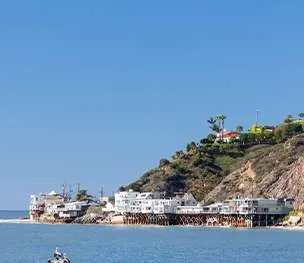

Wilmington at a glance
Wilmington is the City of Los Angeles port town that sits between the 110 Freeway and the Port of Los Angeles, directly north of San Pedro, and it is one of the oldest communities in the Harbor Area. Phineas Banning founded it in the 1850s as the landing that would become the Port of Los Angeles, the Drum Barracks served as a Union Army post during the Civil War, and the town was annexed into Los Angeles in 1909 along with San Pedro. The Banning Residence Museum and the Drum Barracks Civil War Museum still anchor the historic core.
Today Wilmington is a working community in the most literal sense. The port, the refineries along the eastern and southern edges, the oil field that has operated here for a century, and the trucking and logistics businesses along Alameda Street and Pacific Coast Highway employ many residents and shape the landscape. The population is predominantly Latino, multigenerational households are common, and Avalon Boulevard is a main street with locally owned restaurants, markets, bakeries and services.
For homeowners, the most important recent change is the waterfront. Wilmington Waterfront Park opened on the former buffer land between the neighborhood and the port, the Wilmington Waterfront Promenade followed along the water at the foot of Avalon, and the port has committed to continued community investment. Combined with some of the most affordable detached housing in the city and deep lots that take ADUs well, that gives sellers a clear story to tell buyers who are being pushed south by prices in San Pedro, Long Beach and the South Bay.
Homes and architecture in Wilmington
Wilmington's housing stock is older than most of the Harbor Area, with a large share of homes built between the 1900s and the 1940s, including Craftsman bungalows, hipped-roof cottages, Spanish Revival houses and simple wood-frame workers' cottages laid out on a tight grid of lettered and numbered streets. The blocks around Banning Park, including the Banning Park HPOZ, hold the best-preserved concentration of early homes, and scattered Victorians and transitional houses survive near the historic core.
Postwar construction filled in the north and west, especially between Pacific Coast Highway and Lomita Boulevard near Los Angeles Harbor College and in the tracts west of Figueroa toward Harbor City. These are single-story stucco houses from the 1940s and 1950s on standard lots, and they tend to be the easiest homes in Wilmington to finance and sell because the systems are straightforward and the permit history is usually cleaner.
What sets Wilmington apart is the lot pattern. Many parcels are deep and alley-served, and a large number already carry a second house, a converted garage or a legal or informal rear unit. That makes the community one of the stronger ADU markets in the city, and it also means that permit status, utility separation and rent stabilization questions come up on a high share of listings. Small apartment buildings, duplexes and fourplexes line the arterials and the blocks near Anaheim Street, and the Dana Strand site and other public housing sit in the eastern part of the community.
- Craftsman and early 1900s bungalows around Banning Park and the historic core: character buyers and HPOZ protections in the designated blocks
- Postwar single-story houses north of Pacific Coast Highway and near Harbor College: the cleanest financing path and the broadest buyer pool
- Deep lots with existing rear units or ADU potential: the defining opportunity in Wilmington, with permit and rent control due diligence
- Duplexes, fourplexes and small apartment buildings: investor demand, with Los Angeles rent stabilization on most pre-1978 buildings
- Cottages near the oil field and refinery edges: the most affordable detached homes, priced for their location
Streets, pockets and enclaves
Wilmington's pockets are organized around Avalon Boulevard, Pacific Coast Highway, Anaheim Street and the parks, and buyers price them differently depending on housing age, distance from industrial uses and proximity to the waterfront and Harbor College.
These are the areas that come up most in listing conversations.
- Banning Park and the Banning Park HPOZ: early 1900s Craftsman and cottage streets around the Banning Residence Museum, the most architecturally distinct pocket in Wilmington
- Avalon Boulevard corridor: the commercial spine from Pacific Coast Highway south to the waterfront, with housing on the side streets and the new promenade at the foot of the street
- Harbor College area: postwar homes and apartments near Los Angeles Harbor College and Ken Malloy Harbor Regional Park, bordering Harbor City on the west
- North Wilmington above Pacific Coast Highway: 1940s and 1950s tracts between Figueroa and Alameda, closer to Carson and the 405 and farther from port operations
- East Wilmington near Alameda and Anaheim: older bungalows, multifamily and public housing, adjacent to rail and truck corridors, the most affordable blocks
- The waterfront edge near Harry Bridges Boulevard: streets facing Wilmington Waterfront Park, which has changed the feel of the southern blocks
- Drum Barracks and the historic core along Opp and Cary streets: scattered historic houses and cottages between the museum and Banning Park
Schools
Wilmington is served by the Los Angeles Unified School District, with Phineas Banning High School as the community high school and Wilmington Middle School at the middle level. Elementary campuses include Fries Avenue, Gulf Avenue, Hawaiian Avenue, Broad Avenue, Wilmington Park and George De La Torre Jr. Elementary, and assignments follow block boundaries that should be confirmed through the LAUSD Resident School Identifier.
Harbor Teacher Preparation Academy, an LAUSD magnet located on the Los Angeles Harbor College campus, is one of the higher-regarded public high school options in the Harbor Area and draws applicants from across the region. Harbor College itself offers community college and transfer programs, and a number of Catholic and private schools in San Pedro, Harbor City and Long Beach are a short drive. Charter schools have also established campuses in and around Wilmington.
For sellers, the practical point is that many Wilmington buyers are young families, and a clear answer about the assigned schools, the magnet options and Harbor College's role in the community helps them picture staying long term.
Parks, dining and daily life
Wilmington has more park space than its reputation suggests, and the newest pieces are among the best in the Harbor Area. Wilmington Waterfront Park stretches along Harry Bridges Boulevard with lawns, playgrounds and a landscaped buffer from the port, and the Wilmington Waterfront Promenade at the end of Avalon Boulevard puts residents on the water for the first time in generations. Banning Park surrounds the Banning Residence Museum with mature trees and recreation facilities, Ken Malloy Harbor Regional Park and Machado Lake sit on the western edge next to Harbor College, and Wilmington Recreation Center and several smaller parks serve the interior blocks.
Avalon Boulevard is the main street. It carries taquerias, birria and mariscos spots, panaderias, Salvadoran and Filipino restaurants, markets and long-running local businesses, and Anaheim Street and Pacific Coast Highway add supermarkets, pharmacies and auto services. The Banning Residence Museum and the Drum Barracks Civil War Museum offer tours that most buyers do not know exist, and San Pedro's downtown, Long Beach and the South Bay Pavilion in Carson are each minutes away for anything the neighborhood does not have.
Industry is part of daily life. Refineries, the oil field, rail lines and truck routes along Alameda, Pacific Coast Highway and Anaheim mean that air quality, noise and heavy vehicle traffic are legitimate buyer questions, and the community has active organizations working on environmental issues and port mitigation. Sellers do best when they answer those questions directly and point to the buffers, the park investments and the specific block's distance from the heaviest uses.
Commute and getting around
Wilmington is well placed for Harbor Area, Long Beach and South Bay commutes, with the 110 along its western edge, the 710 just east across the Los Angeles River and the Long Beach border, the 47 and Vincent Thomas Bridge to Terminal Island and Long Beach, and Pacific Coast Highway and Alameda Street as the main surface arterials. Downtown Los Angeles is a direct run up the 110, the 405 is reached via the 110 or Pacific Coast Highway, and the port and refineries are within minutes for the many residents who work there.
Transit includes Metro bus lines on Pacific Coast Highway, Avalon, Anaheim and Figueroa, LADOT DASH Wilmington circulating through the neighborhood, and connections to the Metro J Line at the Harbor Gateway Transit Center and to the Metro A Line in Long Beach. Long Beach Transit also serves the eastern edge.
Inside the neighborhood, the flat grid is easy to walk and bike, and the waterfront promenade and Harbor Regional Park trails provide car-free recreation. Truck traffic is concentrated on the arterials, so interior streets are calmer than the main roads suggest, and buyers notice the difference when they walk a block rather than drive through it.
Who buys in Wilmington and why
Wilmington buyers are mostly first-time purchasers and multigenerational families, many with roots in the community or working at the port, the refineries, Harbor College or the logistics employers of the Harbor Area and Carson. They are choosing Wilmington because it offers a detached house with a yard and often a second unit at prices that San Pedro, Harbor City, Long Beach and the South Bay no longer provide, and because family, church and school ties keep people in the community.
Investors are the second major group. Deep alley-served lots, existing rear units and the city's ADU rules make Wilmington attractive to small investors and house hackers who buy a property with two units, live in one and rent the other, as well as to buyers who plan to add an ADU over time. Duplexes and fourplexes near the arterials draw steady interest.
For sellers, this means the buyer pool is practical and financing driven. Many buyers use FHA, VA or down payment assistance programs, which makes appraisal and property condition central to a successful sale, and investor buyers will scrutinize permit history and rent control status. A seller who has that information organized before listing is in a strong position.
Selling a home in Wilmington
The homes that sell fastest in Wilmington are clean single-story houses on interior streets north of Pacific Coast Highway or near Banning Park and Harbor College, properties with a permitted second unit or a lot that clearly supports an ADU, and updated bungalows with original character in the historic core. Buyers respond to a usable yard, off-street parking, updated electrical and plumbing, and a permit file that lets a lender close without conditions.
What sits is usually a property with unpermitted units that cannot be financed cleanly, a house on a truck route or immediately adjacent to industrial or oil field uses, a listing with heavy deferred maintenance in a price band where buyers have little cash after closing, or a property priced against San Pedro or Harbor City comps rather than Wilmington's own. Occupied multi-unit properties with below-market rents also attract a narrower pool.
Local prep that matters: order the LADBS 9A report and pull the full permit history early, because second units, garage conversions and additions are common and will be the first question from buyers' agents and appraisers. Determine whether any rental unit falls under the Los Angeles Rent Stabilization Ordinance and gather rent records. Have the sewer lateral scoped and the electrical panel reviewed on homes built before the 1950s. Confirm whether the property sits within the Banning Park HPOZ, where exterior work is subject to review and should be disclosed. Be prepared to discuss the oil field, refinery and port proximity factually, including any known soil or environmental disclosures for the parcel. Fresh paint, a cleared yard and working systems carry more weight here than designer finishes.
Timing: Wilmington sells year round because demand is driven by need and by family decisions rather than by season, but late winter through early summer brings the heaviest first-time buyer traffic and the most competitive offers for well-prepared homes. Investor interest is steady in every month, so multi-unit and ADU-ready properties can list whenever the paperwork is ready.
Buying in Wilmington
Buyers in Wilmington should verify the permit status and legal use of every structure on the lot, confirm whether existing units are rent stabilized and what the tenants pay, check the electrical, plumbing and foundation on pre-1950s homes, scope the sewer lateral, and research the parcel's proximity to the oil field, refineries and truck routes along with any environmental disclosures. Visit the block at different times of day and on weekdays to understand traffic and port activity, and check whether the property is within the Banning Park HPOZ if exterior changes are planned.
Competition is meaningful for clean, financeable houses and for properties with permitted second units, which often draw several offers from both families and investors, while homes with permit issues or heavy industrial adjacency leave room to negotiate. Winning offers typically pair a solid pre-approval or cash with a short inspection period, a realistic appraisal plan and flexibility on the seller's timeline.
Wilmington seller and buyer questions
Is Wilmington a good place to live?
Yes, for buyers who want one of the most affordable detached houses in the City of Los Angeles, a deep lot with room for a second unit, a strong community with long family roots and quick access to the port, Long Beach and the 110. The tradeoffs are refinery, oil field and truck traffic adjacency on some blocks and fewer retail amenities than San Pedro or Long Beach. The pockets near Banning Park, Harbor College and north of Pacific Coast Highway are the most sought after.
How much does a house cost in Wilmington?
Wilmington is at the entry level for the City of Los Angeles and trades below San Pedro and Harbor City, roughly in line with west Long Beach and parts of Carson. Cottages near the industrial edges and east Wilmington are the lowest tier, postwar houses north of Pacific Coast Highway and near Harbor College make up the middle, and properties with permitted second units, updated bungalows near Banning Park and multi-unit buildings sit at the top. James Malcom will send current closed comps for your street on request.
Is Wilmington expensive?
No. Wilmington is among the least expensive places to buy a detached single-family home anywhere in the City of Los Angeles, which is why first-time buyers and investors from across the Harbor Area and Long Beach keep it active. Prices have risen with the rest of the region and the waterfront investments have drawn new attention, but the community remains well below the citywide median.
What is Wilmington known for?
Wilmington is known as the birthplace of the Port of Los Angeles, founded by Phineas Banning in the 1850s, and for the Banning Residence Museum, the Drum Barracks Civil War Museum, the Wilmington oil field and the refineries along its edges. More recently it is known for Wilmington Waterfront Park and the Wilmington Waterfront Promenade, for Avalon Boulevard's locally owned restaurants and businesses, and for its deep-rooted Latino community and longshore families.
What are the best streets or pockets in Wilmington?
The blocks around Banning Park, including the Banning Park HPOZ, are the most architecturally distinct and sought after for character homes, while the postwar streets north of Pacific Coast Highway and the area near Los Angeles Harbor College and Harbor Regional Park are the most popular with families for quieter blocks and distance from port operations. The streets near Wilmington Waterfront Park have improved noticeably since the park opened. Interior blocks off Avalon Boulevard offer the best balance of walkability and value.
What schools serve Wilmington?
Wilmington is in the Los Angeles Unified School District, served by Phineas Banning High School, Wilmington Middle School and elementary campuses including Fries Avenue, Gulf Avenue, Hawaiian Avenue, Broad Avenue, Wilmington Park and George De La Torre Jr. Harbor Teacher Preparation Academy, an LAUSD magnet on the Los Angeles Harbor College campus, is a well-regarded option, and charter and parochial schools are available in and near the community. Confirm assignments for any address through the LAUSD Resident School Identifier.
Is Wilmington safe?
Wilmington is a working-class residential community where conditions vary by block, with quiet family streets making up most of the neighborhood and more activity near some arterials and industrial corridors. The area is patrolled by LAPD Harbor Division. Review the LAPD crime mapping tool and the city's open data portal for a specific address, visit at different times of day and talk to neighbors, many of whom have lived in Wilmington for decades.
How long does it take to sell a house in Wilmington?
A correctly priced, financeable Wilmington house on an interior street typically goes into escrow within the first few weeks, and properties with permitted second units often draw multiple offers quickly from both families and investors. Homes with unpermitted structures, heavy industrial adjacency or pricing borrowed from San Pedro take longer. Escrows frequently run a little long because many buyers use FHA, VA or assistance programs, so having the permit file and disclosures ready shortens the timeline.
What is the best time of year to sell in Wilmington?
Late winter through early summer brings the most first-time buyer activity in Wilmington and the strongest competition for well-prepared homes, but the community sells in every season because demand is driven by family needs and investor interest rather than by weather. A fall or winter listing can do well against thin inventory if it is priced for current comps.
Does Measure ULA apply to home sales in Wilmington?
Yes. Wilmington is inside the City of Los Angeles, so Measure ULA applies to sales that close above the annually adjusted thresholds, with the tax charged on the entire sale price rather than only the portion above the threshold. The large majority of Wilmington single-family sales fall below the threshold, but larger multi-unit properties and assembled lots can approach it. Neighboring Long Beach and Carson are separate cities where ULA does not apply. Confirm current thresholds before listing.
What do I need to do before selling a home in Wilmington?
Order the LADBS 9A report, install working smoke and carbon monoxide alarms, confirm the seismic gas shut-off valve and water conservation fixtures, and complete the state and city disclosure packages. Locally, pull the full permit history for every structure on the lot, determine rent stabilization status and gather rent records for any units, scope the sewer lateral and review the electrical panel on older homes, confirm whether the property is in the Banning Park HPOZ, and prepare factual answers and any environmental disclosures related to the oil field, refineries and port.
Should I renovate before selling in Wilmington?
Lightly, and with a focus on financing. In Wilmington the best returns come from repairs that let an FHA or VA buyer close without conditions: roof and water intrusion fixes, electrical panel and plumbing updates, working heat, fresh paint, cleaned-up yards and permit corrections for existing structures. Legalizing an existing rear unit or getting an ADU permitted can add real value because it widens the buyer pool, while a high-end kitchen or bath remodel rarely pays back in this price band.
What is Wilmington like compared to San Pedro and Harbor City?
Wilmington is less expensive than both San Pedro and Harbor City, with older housing, deeper lots, more second units and closer proximity to the port, refineries and oil field, while San Pedro offers a walkable downtown, coastal views and higher prices, and Harbor City sits between the two with postwar tracts, newer townhomes and easier access to the 110 and the South Bay. Buyers who want character and lot size at the lowest price choose Wilmington; buyers who want views or a quieter suburban feel pay more next door.
Who is the best listing agent in Wilmington?
James Malcom of The Malcom Group lists homes across the Harbor Area of the City of Los Angeles from the Hollywood office, with listing appointments in Wilmington by appointment. Judge any Wilmington listing agent on whether they can explain how second units, permits and rent control will affect your buyer pool and appraisal, how they handle FHA and VA buyers, whether they market to investors and families at the same time, and whether they speak to the port, refinery and oil field questions directly rather than avoiding them. Call (310) 595-0915 to talk through your property.
Can I sell a house with tenants in Wilmington?
Yes, and in Wilmington it is common because so many lots have a second unit. Buildings with two or more units built before October 1978 are generally covered by the Los Angeles Rent Stabilization Ordinance, city just-cause rules apply to most rentals regardless of age, tenants cannot be required to leave simply because the property is selling, and relocation assistance applies to certain move-outs. Occupied properties attract investors more than owner-occupants, so James can help you compare selling occupied, negotiating a voluntary move-out or timing the sale around a vacancy.
Is Wilmington a buyer's or seller's market right now?
Structurally Wilmington favors sellers of financeable houses on interior streets and properties with permitted second units, because inventory is limited and the buyer pool of first-time families and small investors priced out of San Pedro, Long Beach and the South Bay is deep. Homes with permit problems or heavy industrial adjacency face a more balanced market. Conditions shift with interest rates and seasonal inventory, so confirm live absorption and pricing data with James before setting a strategy.
Nearby neighborhoods
- San Pedro
- Harbor City
- Banning Park
- Carson
- Long Beach
- Terminal Island