
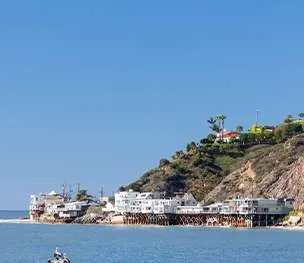

San Pedro at a glance
San Pedro is a port town first and a Los Angeles neighborhood second, and that identity shapes everything about its real estate. The community grew up around the harbor beginning in the 1800s, was annexed by the city in 1909 so Los Angeles could control its port, and still has a working waterfront, longshore families who have been here for generations, and a downtown with its own main streets, its own newspaper history and its own civic life centered on 6th and 7th Streets.
Geographically San Pedro sits on the southern slope of the Palos Verdes peninsula. Gaffey Street runs north to south down the spine, Western Avenue forms the boundary with Rancho Palos Verdes on the west, the harbor and Terminal Island form the east edge, and Point Fermin and the Pacific close the south. The result is a community with ocean and harbor views from a surprising number of streets, a steady marine layer, and temperatures cooler than inland Los Angeles most of the year.
The last decade has brought significant investment to the waterfront, including the West Harbor project on the former Ports O' Call site, the Wilmington and San Pedro promenades, the Cabrillo Way Marina and continued activity at the cruise terminal and the Battleship USS Iowa. Sellers should understand that buyers arriving today are often drawn by that waterfront momentum, by the arts district downtown and by the price gap with the beach cities, and they want to hear how a specific house connects to those things.
Homes and architecture in San Pedro
San Pedro has one of the widest ranges of housing types in the Harbor Area, from early 1900s Craftsman bungalows and Victorian survivors to mid-century ranch houses, 1970s and 1980s view condos and new townhome projects near downtown. The older core north and west of downtown, including Vinegar Hill, Barton Hill and the blocks around Grand Avenue and Pacific Avenue, carries the Craftsman, Spanish Colonial Revival and hipped-roof cottages built for port workers and merchants.
West of Gaffey and up toward Western Avenue, the housing shifts to postwar and mid-century ranch homes on wider lots, particularly in the Palisades, Vista del Oro, Averill Park, Holy Trinity and South Shores areas. Many of these were built in the 1950s and 1960s with single-story plans, two-car garages and backyards, and the ones on the higher streets pick up harbor, Catalina or ocean views. Along Paseo del Mar and the coastal bluffs near Point Fermin and White Point, homes range from modest mid-century houses to substantially rebuilt view properties.
Condos and townhomes are a real part of the market. The bluffs south of 25th Street, the blocks around Cabrillo Beach and the downtown core have condo buildings from the 1970s onward, some with ocean views and some with harbor views, and recent years have added new townhomes and mixed-use residential downtown. Small multifamily buildings, duplexes and houses with back units are common in the older core, and the Rancho San Pedro public housing site near downtown is slated for long-term redevelopment.
- Craftsman and Spanish bungalows in the older core: strong demand from buyers who value character and walkability to downtown
- Mid-century ranches in South Shores, the Palisades and Vista del Oro: the backbone of the family market, premium for views
- Coastal and bluff homes on Paseo del Mar and near Point Fermin: the top of the market, with geology and coastal disclosures that matter
- Condos on the bluffs and downtown: the entry point for coastal living, driven by HOA health and view orientation
- Duplexes and small multifamily near downtown: investor demand, with Los Angeles rent stabilization on most pre-1978 buildings
Streets, pockets and enclaves
San Pedro's pockets have names that locals use every day, and pricing differs sharply between them, so a listing should always identify the specific area rather than just the town.
These are the pockets buyers ask about most.
- Point Fermin and Paseo del Mar: ocean-facing streets at the southern tip near Point Fermin Park, the lighthouse and the Korean Bell, the most coveted addresses in town
- South Shores: mid-century homes on the hills above White Point and Royal Palms, bordering Rancho Palos Verdes, prized for views and quiet streets
- The Palisades and Vista del Oro: established single-family streets west of Gaffey with harbor and ocean views from the upper blocks
- Averill Park and Weymouth Corners: older homes around Averill Park and the Weymouth Avenue shops, one of the most walkable family pockets
- Holy Trinity and Leland Park: mid-century houses around Leland Park and the Holy Trinity parish, central and convenient
- Vinegar Hill: the HPOZ of early 1900s houses north of downtown, with historic review of exterior changes
- Downtown and the Arts District: 6th and 7th Streets, the Warner Grand Theatre, galleries, condos and loft-style units with First Thursday art walks
- Barton Hill and the east side: older bungalows and multifamily between downtown and the harbor, the most affordable detached homes in San Pedro
- Harbor Highlands and the Peck Park area: postwar houses and townhomes near Peck Park and Western Avenue, popular with commuters heading up Western or the 110
Schools
San Pedro is served by the Los Angeles Unified School District, with San Pedro High School on Leland Street as the community's comprehensive high school and Dana Middle School and Dodson Middle School at the middle level. Elementary campuses include Point Fermin, White Point, Taper Avenue, Fifteenth Street, Park Western Place, Seventh Street, Leland Street, Cabrillo Avenue, Bandini Street and Barton Hill, and assignments follow block boundaries that should be confirmed through the LAUSD Resident School Identifier.
San Pedro also has a deeper private and charter bench than most of the Harbor Area. Mary Star of the Sea High School and its elementary school are long-standing Catholic options, Rolling Hills Preparatory School sits on the west side near Western Avenue, Port of Los Angeles High School is a public charter downtown focused on international business and maritime studies, and Holy Trinity School serves the parish neighborhood of the same name. Los Angeles Harbor College in Wilmington and Harbor Teacher Preparation Academy are nearby.
For sellers, school questions come up most often in the west side family pockets, where buyers compare against Palos Verdes Peninsula Unified homes across Western Avenue. Having the assigned campuses and the private options ready for buyers keeps showings productive.
Parks, dining and daily life
San Pedro has more public coastline and open space per resident than almost any other part of the City of Los Angeles, and that is a central selling point. Point Fermin Park sits on the bluffs above the Pacific with its 1874 lighthouse, Angels Gate Park holds the Korean Friendship Bell and the Fort MacArthur museum, Cabrillo Beach offers a calm harbor-side beach and the Cabrillo Marine Aquarium, and White Point Nature Preserve and Royal Palms Beach cover the coast toward Palos Verdes. Averill Park, Peck Park, Leland Park and Friendship Park add neighborhood green space, and Sunken City remains a well-known if officially closed landmark.
Downtown San Pedro is a real main street. 6th and 7th Streets between Pacific Avenue and Harbor Boulevard carry the Warner Grand Theatre, galleries and studios of the arts district, the Grand Annex music venue, long-running Italian and Croatian restaurants that reflect the town's fishing and longshore heritage, Mexican and Peruvian spots, coffee roasters and bars. First Thursday art walks draw crowds monthly. Along the waterfront, the San Pedro Fish Market has been a regional destination for decades and the new West Harbor development is adding restaurants, an amphitheater and retail where Ports O' Call stood.
Everyday shopping runs along Gaffey Street, Western Avenue and 25th Street, with supermarkets, pharmacies and the Terraces shopping center, and the Palos Verdes Peninsula and Long Beach are each close for anything else. The marine layer, foghorns and the steady movement of ships through the Main Channel are part of daily life, and buyers who choose San Pedro generally consider them features rather than drawbacks.
Commute and getting around
San Pedro is at the end of the road, literally, since the 110 Harbor Freeway terminates at Gaffey Street, and that geography is both the appeal and the main commute consideration. Downtown Los Angeles is a straight run north on the 110, Long Beach is minutes away over the Vincent Thomas Bridge on the 47, and the South Bay and LAX are reached via the 110 to the 405 or by surface streets through Palos Verdes and Torrance. Commutes to the Westside are long by any route, which is why most San Pedro buyers work in the Harbor Area, Long Beach, the South Bay or Downtown, or work remotely.
Transit has improved. The Metro J Line bus rapid transit runs from San Pedro, including the Harbor Beacon Park and Ride near the 110, through Harbor Gateway to Downtown Los Angeles using the 110 ExpressLanes. LADOT Commuter Express and DASH routes serve the community, and the Metro A Line in Long Beach is reachable by bus or a short drive. The Catalina Express terminal at the Port and the World Cruise Center make San Pedro a departure point as well as a destination.
Within San Pedro, downtown and the pockets around Weymouth Corners are walkable, the waterfront promenade and the coastal bluff paths are popular with cyclists and runners, and the rest of the community is car oriented with manageable traffic. Parking is generally easy outside of downtown events and cruise days.
Who buys in San Pedro and why
San Pedro buyers fall into a few clear groups: longtime local families and port and longshore households moving up within the community, South Bay and Long Beach buyers priced out of the beach cities who want the coast at a lower cost, and a growing set of remote workers, artists and professionals from across Los Angeles drawn by the arts district, the waterfront and the small-town feel. Retirees and downsizers from Palos Verdes are a steady presence in the bluff condos and the single-story homes of South Shores.
What unites them is a preference for place over prestige. Buyers here value ocean air, views, walkable blocks, a real downtown and neighbors who stay, and they will trade a longer commute to the Westside for those things. Investors are active in the older core and in duplexes near downtown, and the West Harbor opening has brought renewed interest from buyers watching the waterfront.
For sellers, the implication is that storytelling matters more than in a commodity market. A listing that explains the view corridor, the walk to Averill Park or the Warner Grand, the history of the house and the specific pocket will draw stronger engagement than one that leans only on square footage.
Selling a home in San Pedro
The homes that sell fastest in San Pedro are view properties on the west side and along the coast, updated Craftsman and Spanish bungalows within walking distance of downtown or Averill Park, and single-story mid-century houses in South Shores and the Palisades with original character intact. Buyers respond to light, views, outdoor space and a sense that the house has been cared for, and homes that photograph the ocean or the harbor from the living room draw the widest audience.
What sits tends to be homes with major deferred maintenance, properties where unpermitted work complicates financing, condos in buildings with weak reserves or pending special assessments, and listings priced as if every San Pedro home had a view. Homes on the east side near the port and on truck routes face a narrower buyer pool and should be priced against their own comps rather than against the Palisades.
Local prep that matters: San Pedro has specific geology and coastal considerations. The Palos Verdes Fault runs through the area, bluff-top and hillside properties near Paseo del Mar and Point Fermin carry landslide and coastal erosion history that buyers will research, and the 2011 Paseo del Mar slide is widely known. Order the LADBS 9A report, pull permit history on additions and back units, confirm whether the property is in a designated hillside or coastal zone that affects permitting, check for foundation and drainage issues on older homes, and have older sewer laterals scoped. In Vinegar Hill, HPOZ rules apply to exterior changes and should be disclosed. For condos, gather the HOA documents, reserve study and any litigation or assessment history early. Port-adjacent properties should be ready for questions about air quality, noise and the long-term waterfront plans.
Timing: San Pedro's strongest listing window is spring through early summer, when the marine layer lifts in the afternoons and view properties show at their best, and when families aim to settle before the school year. Late summer and early fall are also strong for coastal homes because the weather is clearest and buyers from inland Los Angeles are most receptive to the cool climate. Winter listings can succeed against thin inventory if the home is priced accurately and photographed on a clear day.
Buying in San Pedro
Buyers in San Pedro should check geology and soils reports for hillside and bluff properties, verify view protection and what could be built on neighboring lots, review HOA financials carefully on condos, confirm permit history on older homes and back units, and visit the block at different times to gauge port, cruise terminal and truck traffic. On the west side, confirm whether the address is in the City of Los Angeles or Rancho Palos Verdes, since the line runs along Western Avenue and affects schools, taxes and transfer costs.
Competition is strongest for updated view homes and character bungalows near downtown, where multiple offers are common in healthy markets, while east side homes and some condo buildings offer more room to negotiate. Winning offers usually combine a strong pre-approval or cash, a reasonable inspection period, a clear plan for appraisal and respect for the seller's timeline, and local agents notice when a buyer understands the specific pocket.
San Pedro seller and buyer questions
Is San Pedro a good place to live?
Yes, for buyers who want coastal living, ocean and harbor views, a walkable historic downtown and a strong community identity at prices well below the beach cities and the Westside. The tradeoffs are a long commute to anywhere north of Downtown, port and cruise activity on the east side, and a steady marine layer. Families gravitate to the west side pockets like the Palisades, South Shores and Averill Park, while downtown and the bluffs draw buyers who want walkability and views.
How much does a house cost in San Pedro?
San Pedro trades in the middle of the City of Los Angeles overall, with wide variation by pocket. East side bungalows and downtown condos sit at the entry level, mid-century houses in the Palisades, Vista del Oro and Holy Trinity make up the middle, and view homes in South Shores, Point Fermin and along Paseo del Mar reach the upper tier, approaching neighboring Rancho Palos Verdes. Overall the community is priced above Wilmington and Harbor City and below Palos Verdes and the beach cities. James Malcom will send current closed comps for your street on request.
Is San Pedro expensive?
San Pedro is moderately priced for coastal Los Angeles and remains one of the least expensive places in the county to own a home with an ocean view. It is not inexpensive by national standards, and the premium pockets near Point Fermin and South Shores command prices in line with upper-tier Los Angeles neighborhoods, but the older core and the east side offer detached houses at prices that are hard to find anywhere else near the coast.
What is San Pedro known for?
San Pedro is known as the home of the Port of Los Angeles, the busiest container port in the country, and for its longshore and fishing heritage, Croatian and Italian roots, and tight community identity. Landmarks include Point Fermin Lighthouse, the Korean Friendship Bell at Angels Gate Park, Cabrillo Beach and Aquarium, the Vincent Thomas Bridge, the Battleship USS Iowa, the Warner Grand Theatre, the downtown arts district and First Thursday art walks, the San Pedro Fish Market and the new West Harbor waterfront.
What are the best streets or pockets in San Pedro?
Paseo del Mar and the streets around Point Fermin Park are the most coveted addresses for ocean views, followed by South Shores above White Point and the upper streets of the Palisades and Vista del Oro for harbor and Catalina views. Averill Park and Weymouth Corners are the most sought after for walkable family living with older homes, and Vinegar Hill draws buyers who want preserved early 1900s architecture. Downtown condos and lofts appeal to buyers who prioritize the arts district and the waterfront.
What schools serve San Pedro?
San Pedro is in the Los Angeles Unified School District, with San Pedro High School, Dana Middle School and Dodson Middle School serving the community and elementary campuses including Point Fermin, White Point, Taper Avenue, Fifteenth Street, Park Western Place, Seventh Street, Leland Street and Cabrillo Avenue. Private and charter options include Mary Star of the Sea High School and Elementary, Rolling Hills Preparatory School, Holy Trinity School and Port of Los Angeles High School. Confirm assignments for any address through the LAUSD Resident School Identifier.
Is San Pedro safe?
San Pedro is generally a settled residential community where conditions vary by pocket, with the west side and coastal areas among the quietest in the Harbor Area and the blocks nearest downtown and the port seeing more activity. The area is patrolled by LAPD Harbor Division, which is headquartered in the community. Review the LAPD crime mapping tool and the city's open data portal for recent activity on a specific block, visit at different times and talk to neighbors, who in San Pedro tend to have lived there a long time.
How long does it take to sell a house in San Pedro?
A well-priced, well-presented San Pedro home typically goes into escrow within the first few weeks, and updated view homes and character bungalows near downtown often move faster with multiple offers. Homes with deferred maintenance, geology questions on the bluffs, weak HOA financials in condo buildings or pricing that ignores the pocket take longer. Escrow length depends on financing and on how quickly disclosures, HOA documents and any geology reports are delivered, so having them ready shortens the process.
What is the best time of year to sell in San Pedro?
Spring through early summer is the strongest window for most San Pedro homes, with late summer and early fall a close second for view and coastal properties because the skies are clearest and inland buyers are most receptive to the cool climate. Photograph view homes on a clear afternoon regardless of season. Winter listings can perform well against limited competition if priced accurately.
Does Measure ULA apply to home sales in San Pedro?
Yes. San Pedro is inside the City of Los Angeles, so Measure ULA applies to sales that close above the annually adjusted thresholds, and the tax is charged on the entire sale price rather than only the portion above the threshold. Most San Pedro single-family sales fall below the threshold, but upper-tier view homes on Paseo del Mar, in South Shores and on Point Fermin, as well as multi-unit properties, can approach or exceed it. Note that homes across Western Avenue in Rancho Palos Verdes are outside the city and not subject to ULA. Confirm current thresholds before you list.
What do I need to do before selling a home in San Pedro?
Order the LADBS 9A report, install working smoke and carbon monoxide alarms, confirm the seismic gas shut-off valve and water conservation fixtures, and complete the state and city disclosures. Locally, pull permit history for additions and back units, gather any geology or soils reports for hillside and bluff properties, disclose known landslide and coastal erosion history near Paseo del Mar and Point Fermin, confirm hillside or coastal zone status, scope the sewer lateral on older homes, and for condos assemble HOA documents and reserve studies. In Vinegar Hill, disclose HPOZ status and any exterior work history.
Should I renovate before selling in San Pedro?
Selectively. In San Pedro buyers reward preserved character in Craftsman and Spanish homes and views in mid-century houses, so the best returns come from restoring rather than replacing original details, refreshing kitchens and baths without erasing period features, improving outdoor spaces, clearing view corridors and painting. Full gut renovations rarely pay back in the mid tier, but addressing deferred maintenance, roofing, drainage and anything that would raise a lender or inspector flag is worth doing before listing.
What is San Pedro like compared to Rancho Palos Verdes and Long Beach?
San Pedro shares the peninsula and the coastline with Rancho Palos Verdes but is inside the City of Los Angeles, has older and more varied housing, a real downtown and prices well below Palos Verdes, while Rancho Palos Verdes offers larger lots, Palos Verdes Peninsula Unified schools and higher prices. Compared to Long Beach across the Vincent Thomas Bridge, San Pedro is smaller, quieter and more residential, with more coastal open space and less nightlife, and the two trade at broadly similar levels for comparable housing.
Who is the best listing agent in San Pedro?
James Malcom of The Malcom Group lists homes across the Harbor Area of the City of Los Angeles from the Hollywood office, with listing appointments in San Pedro by appointment. Judge any San Pedro listing agent on whether they price by pocket rather than by town, whether they understand geology and coastal disclosures on bluff properties, how they handle HOA documentation on condos, and whether their marketing tells the story of the specific street, the view and the walk to downtown or the parks. Call (310) 595-0915 to talk through your home.
Can I sell a house with tenants in San Pedro?
Yes. Homes and small multifamily buildings can be sold with tenants in place, but most San Pedro rental buildings with two or more units built before October 1978 are covered by the Los Angeles Rent Stabilization Ordinance, and city just-cause rules apply to most rentals regardless of age. Tenants cannot be removed simply because the property is selling, relocation assistance applies to certain move-outs, and occupied properties generally attract investors rather than owner-occupants. James can help you weigh selling occupied, negotiating a voluntary move-out or waiting for a natural vacancy.
Is San Pedro a buyer's or seller's market right now?
Structurally San Pedro favors sellers of view homes, character bungalows near downtown and well-kept single-story houses on the west side, because those properties are scarce and the buyer pool from the South Bay, Long Beach and across Los Angeles is broad. Condos in buildings with financial issues and east side homes near the port face a more balanced market. Conditions shift with interest rates and seasonal inventory, so confirm live absorption and pricing data with James before deciding how to list.
Nearby neighborhoods
- Rancho Palos Verdes
- Wilmington
- Harbor City
- Long Beach
- Terminal Island
- Palos Verdes Estates
Compare San Pedro with
- Rancho Palos Verdes
- Long Beach