
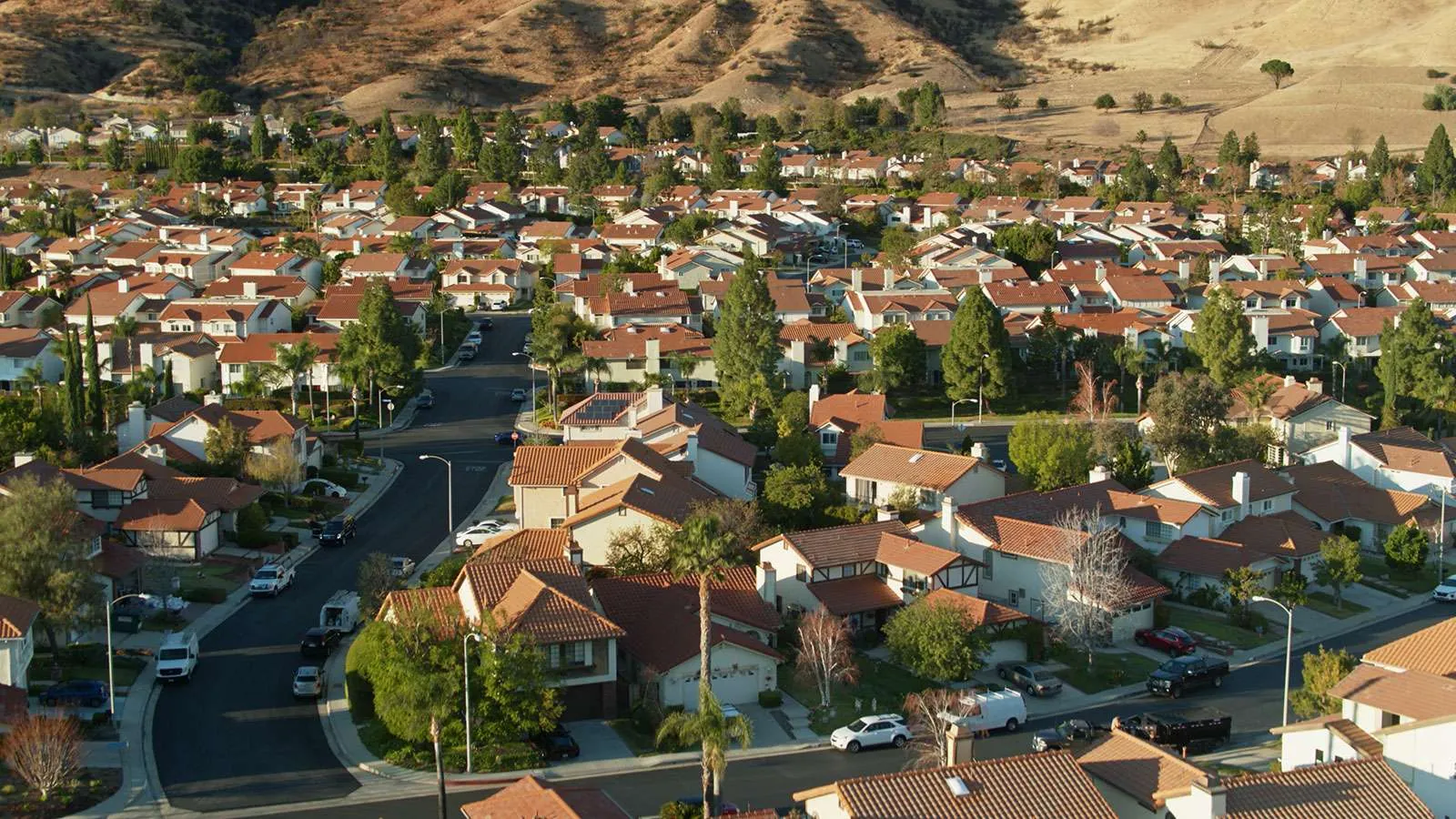

Stonehurst at a glance
Stonehurst is a semi-rural residential pocket in the northeast corner of Sun Valley, in the City of Los Angeles, bordered by Hansen Dam and Lake View Terrace to the north, Shadow Hills to the east and the industrial and residential blocks of Sun Valley to the south and west. It centers on Stonehurst Avenue, Wheatland Avenue, Dronfield Avenue and the cross streets around Wentworth Street and Stonehurst Recreation Center.
The neighborhood takes its name and identity from the river-rock houses that stonemason Dan Montelongo and his crews built in the 1920s using boulders gathered from the Tujunga Wash, a distinctive vernacular style found almost nowhere else in Los Angeles. The City designated Stonehurst a Historic Preservation Overlay Zone in 2000 to protect those houses and the area's low-density, equestrian character, making it one of the few HPOZs in the Valley and the only one built around stone construction.
Homes and architecture in Stonehurst
Stonehurst's defining houses are the 1920s river-rock cottages and bungalows built by Dan Montelongo, with thick walls of rounded boulders set in mortar, deep porches, stone chimneys and low, grounded profiles that look like they grew out of the wash. Several dozen survive and are identified as contributing structures in the HPOZ, along with stone walls, gateposts and outbuildings that line the streets.
Around the stone houses the neighborhood filled in with 1940s to 1960s ranch homes, many on equestrian-zoned lots with barns, corrals, arenas and tack rooms, plus a scattering of newer custom homes built on larger parcels. Lot sizes are generous by city standards, and many properties combine a modest house with substantial land, which is where much of the value sits.
Horse keeping is central to the neighborhood's identity, with trail access toward Hansen Dam and the equestrian facilities there, and buyers routinely evaluate properties on the quality of the horse improvements and the usability of the land as much as on the house. Condition of the stone houses varies from carefully restored to needing structural and systems work.
Streets, pockets and enclaves
Stonehurst is compact, but value varies by whether a property has a stone house, horse zoning, lot size and proximity to the recreation center and Hansen Dam versus the industrial edges of Sun Valley.
- Stonehurst Avenue around the recreation center: the heart of the HPOZ with the largest concentration of river-rock houses
- Wheatland Avenue and Dronfield Avenue: equestrian lots, ranch homes and several stone houses, popular with horse owners
- Near Wentworth Street and the Shadow Hills border: larger parcels with trail access toward Hansen Dam
- The McBroom Street and Sheldon Street edge: closer to Sun Valley's commercial and industrial blocks, more traffic, lower pricing
- Lots backing open space or the wash: premiums for privacy and views toward the Verdugo and San Gabriel foothills
Schools
Stonehurst is served by LAUSD, with Stonehurst Avenue Elementary School located in the neighborhood, Byrd Middle School in Sun Valley and Francis Polytechnic High School or Sun Valley High School depending on address and program. Families also consider Verdugo Hills High School in Tujunga and the magnet and charter options across the northeast Valley.
Village Christian School in Sun Valley is the largest nearby private option, and additional parochial and independent schools are within a short drive in Sunland-Tujunga, La Crescenta and Burbank. Boundaries change, so buyers should confirm assignments with LAUSD before relying on a specific school.
Parks, dining and daily life
Daily life in Stonehurst revolves around horses, open space and Hansen Dam, with the Hansen Dam Recreation Area's equestrian center, lake, golf course and trails a short ride or drive north, Stonehurst Recreation Center at the center of the neighborhood and the Angeles National Forest beyond Tujunga. The streets are quiet and residents ride, walk and garden on their own land.
Shopping and dining are practical rather than destination oriented, with grocery, feed stores, hardware and family restaurants along Sunland Boulevard, Glenoaks Boulevard and Foothill Boulevard in Sun Valley, Shadow Hills and Sunland. Burbank's downtown and the Empire Center are a short drive south for a fuller range of restaurants and retail.
Commute and getting around
Stonehurst is a car-dependent neighborhood with the 210 freeway a few minutes north via Wheatland Avenue or Sunland Boulevard and the 5 a few minutes southwest, connecting to Burbank, Glendale, Pasadena and Downtown. Commutes to Burbank's media district and Bob Hope Airport are short, which is a major draw for entertainment industry buyers who want land.
Who buys in Stonehurst and why
Stonehurst draws equestrians who want horse-zoned land inside the City of Los Angeles with trail access to Hansen Dam, buyers seeking acreage for animals, workshops, trucks or small agriculture, architecture and preservation enthusiasts drawn to the Montelongo stone houses, and entertainment industry workers who want a rural setting within a short drive of Burbank. Many come from Shadow Hills, Sunland-Tujunga, Burbank and the eastside.
Selling a home in Stonehurst
The properties that sell fastest in Stonehurst are well-kept horse properties with usable flat land, sound barns and corrals, trail access and a clean house, and restored river-rock homes with their stonework, porches and chimneys intact and systems updated, both marketed to the equestrian and character buyer communities rather than listed as generic Sun Valley homes. Properties that combine a stone house with horse improvements are the top of the market.
What sits is a stone house with deferred structural, roof or foundation work priced as restored, a horse property with unpermitted barns or structures that lenders will not accept, a parcel priced to a Shadow Hills comp without comparable land or improvements, or a listing that fails to reach horse and preservation buyers. Properties near the industrial edges need to be priced for the location.
Preparation that matters locally begins with the lot and the HPOZ. Gather zoning confirmation, permits for barns, corrals and outbuildings, animal-keeping documentation and HPOZ approvals for past exterior work on contributing structures, and have the foundation, roof and seismic condition of a stone house evaluated and documented. James Malcom reviews the preservation plan and permit history before listing and advises what to repair, legalize or disclose. Every City of Los Angeles seller also needs the LADBS 9A report, smoke and carbon monoxide alarms, a seismic gas shut-off valve and water conservation retrofits before close, and fire zone parcels need brush clearance and disclosure.
The best listing windows in Stonehurst are spring, when the land is green and the foothills photograph well, and early fall after the heat breaks. Horse buyers shop year-round, and a well-marketed property with the right documentation sells in any season. Reaching the equestrian and preservation audiences matters more than the month.
Buying in Stonehurst
Buyers in Stonehurst should verify equestrian zoning and animal-keeping rights, confirm permits for barns and outbuildings, evaluate water, drainage and flood status near the wash, inspect stone houses for foundation, roof and seismic condition, and review the HPOZ preservation plan to understand what exterior changes will require review. Competition is real for turnkey horse properties and restored stone houses, which draw buyers from across the region, while properties needing restoration or with permit issues offer more room to negotiate.
James Malcom can pull every closed sale in the area and explain how each value factor has priced in.
Historic preservation rules in Stonehurst
Stonehurst has been a City of Los Angeles Historic Preservation Overlay Zone since 2000, which means exterior changes visible from the street on contributing structures, including the river-rock houses, stone walls and gateposts, are reviewed by the Office of Historic Resources and the HPOZ Board against the neighborhood's preservation plan. Non-contributing homes face lighter review, interior changes are not regulated, and the HPOZ also helps preserve the area's low-density, equestrian character by shaping what new construction looks like.
For sellers, the HPOZ means three practical things. First, the HPOZ status must be disclosed, and buyers of contributing structures should receive the preservation plan and any approvals for past work. Second, unapproved alterations to stonework, windows or additions can become buyer concerns, so sellers should identify them and seek retroactive approval or disclose clearly. Third, the HPOZ is a selling point to character buyers, who value the assurance that the stone houses and rural streetscape will not be replaced with tract housing.
The Mills Act, a state program administered by the city, can give owners of contributing structures in an HPOZ a property tax reduction in exchange for a contract to maintain and restore the home, and the contract transfers to buyers. For a Montelongo stone house that can make ownership meaningfully more affordable. Availability depends on city program capacity and contributing status, so sellers should check for an existing contract or evaluate applying before sale with James Malcom's help.
Stonehurst seller and buyer questions
Is Stonehurst a good place to live?
Yes, for buyers who want horse-zoned land, a semi-rural setting and a distinctive historic streetscape inside the City of Los Angeles, within a short drive of Burbank. Stonehurst offers large lots, trail access to Hansen Dam and the 1920s river-rock houses protected by an HPOZ. The tradeoffs are a car-dependent location, proximity to Sun Valley's industrial blocks on some edges and HPOZ review for exterior changes to contributing homes.
How much does a house cost in Stonehurst?
Stonehurst is priced in the entry to mid tier for the San Fernando Valley and below the citywide median on a per-house basis, but the large lots and horse zoning push many properties above ordinary Sun Valley pricing, in line with Shadow Hills horse property. Smaller ranch homes on standard lots are the entry point, equestrian properties sit in the middle, and restored river-rock houses on horse-zoned acreage form the top of the market. James Malcom will send current closed comps for the neighborhood on request.
What is Stonehurst known for?
Stonehurst is known for the 1920s river-rock houses built by stonemason Dan Montelongo from Tujunga Wash boulders, protected since 2000 as one of the few Historic Preservation Overlay Zones in the Valley, and for its equestrian, semi-rural character next to Hansen Dam. Stonehurst Recreation Center and Stonehurst Avenue Elementary sit at its center.
What are the best streets in Stonehurst?
Stonehurst Avenue around the recreation center holds the largest concentration of river-rock houses and is the heart of the HPOZ, while Wheatland Avenue, Dronfield Avenue and the streets near Wentworth and the Shadow Hills border offer the best equestrian lots and trail access toward Hansen Dam. Properties backing open space or the wash carry premiums; the edges near McBroom and Sheldon Streets trade lower for traffic and industrial proximity.
What schools serve Stonehurst?
Stonehurst is served by LAUSD, including Stonehurst Avenue Elementary School in the neighborhood, Byrd Middle School and Francis Polytechnic High School or Sun Valley High School depending on address and program. Village Christian School in Sun Valley is the largest nearby private option. Confirm current assignments with LAUSD before relying on a specific school.
Is Stonehurst safe?
Stonehurst is a quiet, low-density residential pocket where conditions vary by block, with the interior equestrian streets calmer than the edges near Sun Valley's commercial and industrial corridors. It is patrolled by the LAPD Foothill Division. Buyers should review the LAPD crime mapping tool for the specific address and visit at different times of day rather than relying on general impressions of Sun Valley.
What is the best time of year to sell in Stonehurst?
Spring, when the land is green and the foothills photograph well, and early fall after the heat breaks are the strongest windows in Stonehurst. Horse buyers shop year-round, and a property with clean zoning, permit and HPOZ documentation sells in any season. Reaching the equestrian and preservation buyer communities matters more than the month.
Does Measure ULA apply to home sales in Stonehurst?
Yes, Stonehurst is inside the City of Los Angeles, so Measure ULA applies to sales that close above the annually adjusted thresholds. ULA is a transfer tax charged on the entire sale price once the threshold is crossed. Most Stonehurst homes sell below the first threshold, but large equestrian estates and multi-parcel sales can reach it, so confirm the current figures with James Malcom before pricing.
What do I need to do before selling a home in Stonehurst?
Every City of Los Angeles seller needs the LADBS 9A report, working smoke and carbon monoxide alarms, a seismic gas shut-off valve, water conservation retrofits and the standard California disclosures. In Stonehurst, also disclose the HPOZ status and provide the preservation plan and past approvals for contributing structures, gather zoning and permits for barns and outbuildings, document foundation, roof and seismic condition on stone houses, and complete brush clearance where fire zone rules apply.
What is Stonehurst like compared to Shadow Hills?
Stonehurst and Shadow Hills are both equestrian neighborhoods next to Hansen Dam, but Stonehurst is smaller, flatter, protected by an HPOZ built around its 1920s stone houses and generally more affordable, while Shadow Hills is larger, hillier, with more custom homes, views and higher prices. Compared to the rest of Sun Valley, Stonehurst is far less dense, more rural and more expensive on a per-lot basis.
Who is the best listing agent in Stonehurst?
James Malcom of The Malcom Group lists homes across the San Fernando Valley from the Encino office and understands equestrian property and the HPOZ process. Judge any agent by whether they know the neighborhood's sales history, can explain the preservation plan and Mills Act, understand horse zoning and barn permits, market to the equestrian and preservation communities beyond the MLS and will price against Stonehurst comps rather than Sun Valley averages. Call (310) 595-0915 for a listing consultation.
Does the Stonehurst HPOZ hurt or help my home's value?
For owners of river-rock houses and well-kept properties, it generally helps, because character buyers pay a premium for the assurance that the stone houses and semi-rural streetscape will not be replaced by dense development, and the HPOZ is a recognized mark of authenticity. The constraint is that street-visible exterior changes to contributing structures require review and must be disclosed. The net effect in a specialist pocket like Stonehurst is positive for sellers who present it correctly.
Can I get a Mills Act contract on a Stonehurst stone house?
Possibly, because the Mills Act allows owners of contributing structures in a City of Los Angeles HPOZ to receive a property tax reduction in exchange for a contract to maintain and restore the home, and the contract transfers to a buyer. For a Montelongo river-rock house, that can make ownership meaningfully more affordable and the listing more attractive. Availability depends on the city's program capacity and the home's contributing status, so sellers should check for an existing contract or evaluate applying before sale with James Malcom's help.
Nearby neighborhoods
Compare Stonehurst with
All San Fernando Valley neighborhoods · Full Los Angeles directory