
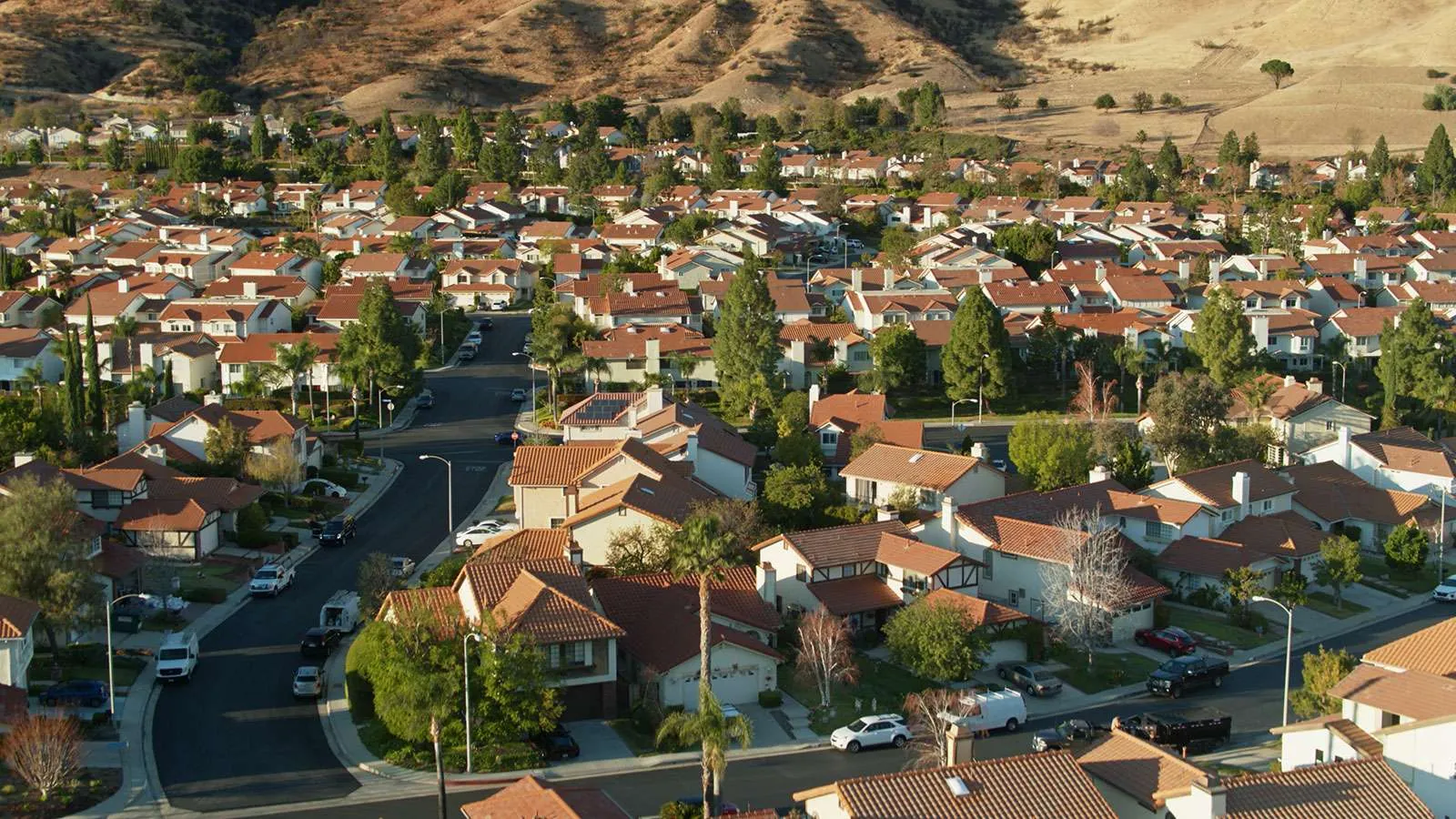

Balboa Highlands at a glance
Balboa Highlands is a compact tract of roughly a hundred Eichler homes in the northern foothills of Granada Hills, the only Eichler development in the San Fernando Valley and one of only a few in Southern California. It sits north of Rinaldi Street near Balboa Boulevard and the 118 freeway, on gently sloping streets including Jimeno Avenue, Darla Avenue, Lisette Street, Nanette Street and Ludlow Street, with O'Melveny Park and the Santa Susana foothills to the north.
Joseph Eichler built the tract in 1963 and 1964 using designs from the firms of A. Quincy Jones and Frederick Emmons and Claude Oakland, bringing his Northern California post-and-beam modernism to Los Angeles. The homes feature open atriums, floor-to-ceiling glass, exposed beams, radiant heating in the slabs and flat or low-gabled roofs, with minimal street-facing windows and private rear elevations that open to the yard. In 2010 the City of Los Angeles designated Balboa Highlands a Historic Preservation Overlay Zone to protect the tract's integrity.
Homes and architecture in Balboa Highlands
Every home in Balboa Highlands is an Eichler, built in the early 1960s from a handful of floor plans that share post-and-beam construction, open atriums or courtyards at the entry, glass rear walls, tongue-and-groove ceilings, slab foundations with radiant heat and flat or low-pitched roofs. Most are single-story with three or four bedrooms, and the plans were designed for indoor-outdoor living with the main rooms opening to the back yard and pool.
Condition and originality vary widely. Some homes retain original mahogany paneling, globe lights, Eichler siding and atrium configurations, and these command the highest prices from purist buyers. Others were remodeled in the 1980s and 1990s in ways that covered beams, replaced glass with stucco or enclosed atriums, and buyers now pay to reverse those changes. A third group has been sensitively updated with new kitchens, baths and systems while preserving the architecture, and that balance is what most buyers want.
Common technical issues include roof leaks on flat roofs, failed radiant heating lines in the slab, single-pane glass and original electrical panels, and knowledgeable buyers inspect for all of them. Replacement roofs with proper foam or membrane systems and updated radiant or mini-split heating are significant value adds.
Streets, pockets and enclaves
Balboa Highlands is small enough that every street is part of the same tract, but the gentle slope, lot orientation and views toward the Valley or the foothills create differences in value between blocks.
- Jimeno Avenue and Darla Avenue: the central spine of the tract with the largest concentration of homes
- Lisette Street and Nanette Street: quieter cross streets with some of the best-preserved examples
- Ludlow Street and the upper edge toward the foothills: lots with elevation and views toward O'Melveny Park
- Lower lots near Rinaldi Street: closer to Balboa Boulevard retail and the 118, slightly more traffic exposure
- Corner and oversized lots: premiums for additional privacy and pool and landscape potential
Schools
Balboa Highlands is served by LAUSD, with Granada Hills Charter High School, one of the largest and best-known charter high schools in the country, as the main public high school, and nearby elementary and middle schools including Van Gogh Charter Elementary and Robert Frost Middle School depending on address. The Granada Hills school profile is a major reason families pay a premium for the area.
Private options in Granada Hills, Northridge, Porter Ranch and Mission Hills are within a short drive, and California State University Northridge is a few minutes south. Boundaries change, so buyers should confirm assignments with LAUSD before relying on a specific school.
Parks, dining and daily life
Daily life in Balboa Highlands is quiet and oriented to the foothills, with O'Melveny Park, the second-largest park in the City of Los Angeles, and its trails into the Santa Susana Mountains a short walk or drive north, plus Bee Canyon Park and the Granada Hills Recreation Center nearby. The tract's own streets are low-traffic and residents use them for walking.
Shopping and dining sit along Balboa Boulevard, Chatsworth Street in Old Granada Hills and Rinaldi Street, with grocery stores, neighborhood restaurants and services close at hand, and Porter Ranch's newer retail centers and Northridge Fashion Center a few minutes away. The annual Granada Hills Street Faire and the Old Granada Hills business district add to the area's small-town feel.
Commute and getting around
Balboa Highlands sits just south of the 118 freeway, with the Balboa Boulevard interchange minutes away, connecting east to the 405, the 5 and the 210 and west to Simi Valley and Ventura County. The 405 is a short drive south for the central Valley and the Westside, with the usual Sepulveda Pass delays at peak hours.
Who buys in Balboa Highlands and why
Balboa Highlands draws buyers who are specifically searching for an Eichler or a true mid-century modern home, often architects, designers, entertainment industry creatives and mid-century enthusiasts who follow the national Eichler community, along with families who want the Granada Hills schools and a distinctive home rather than a tract ranch. Many buyers come from the eastside, the Westside and even from Northern California, where Eichler neighborhoods are far more expensive.
Selling a home in Balboa Highlands
The homes that sell fastest in Balboa Highlands are authentic or sensitively restored Eichlers with open atriums, preserved beams and paneling, updated kitchens, baths and systems, a new roof and a pool, marketed with architectural photography to the Eichler and mid-century community and priced against recent Balboa Highlands sales rather than Granada Hills ranch comps. These homes often draw multiple offers from out-of-area buyers.
What sits is an Eichler whose character was stripped by a prior remodel and priced as if it were original, a home with an aging flat roof, failed radiant heat or single-pane glass priced as turnkey, or a listing marketed generically through the MLS without reaching the Eichler audience. Homes with unapproved exterior changes that conflict with the HPOZ preservation plan need to be addressed or disclosed before listing.
Preparation that matters locally begins with the architecture and the HPOZ. Gather any approvals for past exterior changes, document roof, radiant heating and electrical work, and consider restoring covered beams or reopening an enclosed atrium where cost allows, because Eichler buyers pay for authenticity. James Malcom reviews the HPOZ preservation plan against the home before listing and advises what to restore, disclose and present. Every City of Los Angeles seller also needs the LADBS 9A report, smoke and carbon monoxide alarms, a seismic gas shut-off valve and water conservation retrofits before close.
The best listing windows in Balboa Highlands are spring and early fall, when the light through the glass walls photographs best and buyers from outside the area are most willing to travel, but because the Eichler buyer pool is national and specific, a well-marketed home sells in any season. Correct pricing against the tract's own sales history is what produces a fast sale.
Buying in Balboa Highlands
Buyers in Balboa Highlands should inspect the roof, the radiant heating system in the slab, the electrical panel, the glass and the condition of the beams and siding, confirm which exterior changes have HPOZ approval, and review the Balboa Highlands HPOZ preservation plan to understand what future changes require review. Competition is strongest for authentic, updated Eichlers, which draw buyers from across the region and beyond, while heavily altered homes offer restoration opportunity at a lower price.
James Malcom can pull every closed sale in the area and explain how each value factor has priced in.
Historic preservation rules in Balboa Highlands
Balboa Highlands has been a City of Los Angeles Historic Preservation Overlay Zone since 2010, which means exterior changes visible from the street, including roofs, siding, windows, doors, garage doors, fences, paint in some cases and front landscaping, are reviewed by the Office of Historic Resources and the HPOZ Board against the tract's preservation plan. Interior changes are not regulated, and rear elevations have more flexibility, but the street-facing character of each Eichler is protected.
For sellers, the HPOZ means three practical things. First, the HPOZ status must be disclosed, and buyers should receive the preservation plan and any approvals for past work. Second, unapproved exterior alterations can become a buyer concern, so sellers should identify them and either seek retroactive approval or disclose clearly. Third, the HPOZ is a selling point to Eichler buyers, who value the guarantee that the tract will keep its character, and listings should present it that way.
The Mills Act, a state program administered by the city, can give owners of contributing structures in an HPOZ a property tax reduction in exchange for a contract to maintain and restore the home, and the contract transfers to buyers. Availability depends on city program capacity and the home's contributing status, so sellers should check for an existing contract or evaluate applying before sale. James Malcom can walk through the HPOZ and Mills Act implications for a specific home.
Balboa Highlands seller and buyer questions
Is Balboa Highlands a good place to live?
Yes, for buyers who want an authentic Eichler mid-century modern home in a quiet foothill setting with Granada Hills schools, O'Melveny Park trails and 118 freeway access. Balboa Highlands offers roughly a hundred post-and-beam homes protected by an HPOZ, which preserves the tract's character. The tradeoffs are a car-dependent north Valley location, the maintenance demands of flat roofs and radiant heat, and HPOZ review for exterior changes.
How much does a house cost in Balboa Highlands?
Balboa Highlands is priced in the upper tier for the north San Fernando Valley, well above the surrounding Granada Hills ranch tracts and comparable to or above Porter Ranch, while remaining below Encino and Sherman Oaks. Heavily altered Eichlers are the entry point, sensitively updated homes sit in the middle, and authentic or fully restored Eichlers with new roofs and pools form the top of the market. James Malcom will send current closed comps for the tract on request.
What is Balboa Highlands known for?
Balboa Highlands is known as the only Eichler tract in the San Fernando Valley and one of the few in Southern California, built in 1963 and 1964 with designs by A. Quincy Jones and Frederick Emmons and Claude Oakland, and designated a Historic Preservation Overlay Zone in 2010. The atrium entries, glass walls and post-and-beam construction make it a destination for mid-century modern enthusiasts.
What are the best streets in Balboa Highlands?
Every street in Balboa Highlands is part of the Eichler tract, including Jimeno Avenue, Darla Avenue, Lisette Street, Nanette Street and Ludlow Street. Homes on the upper streets with elevation and views toward the foothills and O'Melveny Park, corner and oversized lots, and the best-preserved examples command premiums. Lots closest to Rinaldi Street have slightly more traffic exposure.
What schools serve Balboa Highlands?
Balboa Highlands is served by LAUSD, including Granada Hills Charter High School and nearby schools such as Van Gogh Charter Elementary and Robert Frost Middle School depending on address. Granada Hills Charter is one of the largest and best-known charter high schools in the country. Confirm current assignments with LAUSD before relying on a specific school.
Is Balboa Highlands safe?
Balboa Highlands is a quiet, low-traffic residential tract in the Granada Hills foothills, and it is patrolled by the LAPD Devonshire Division. As with any neighborhood, buyers should review the LAPD crime mapping tool for the specific address and visit at different times of day. The tract's small size and single entry pattern give it a settled, neighborly character.
What is the best time of year to sell in Balboa Highlands?
Spring and early fall are the strongest windows in Balboa Highlands, when the light through the glass walls photographs best and out-of-area buyers are most willing to travel, but because the Eichler buyer pool is specific and national, a well-marketed home sells in any season. Reaching the right audience matters more than the month.
Does Measure ULA apply to home sales in Balboa Highlands?
Yes, Balboa Highlands is inside the City of Los Angeles, so Measure ULA applies to sales that close above the annually adjusted thresholds. ULA is a transfer tax charged on the entire sale price once the threshold is crossed. Most Balboa Highlands homes sell below the first threshold, but the best restored examples can approach it, so confirm the current figures with James Malcom before pricing.
What do I need to do before selling a home in Balboa Highlands?
Every City of Los Angeles seller needs the LADBS 9A report, working smoke and carbon monoxide alarms, a seismic gas shut-off valve, water conservation retrofits and the standard California disclosures. In Balboa Highlands, also disclose the HPOZ status and provide the preservation plan, gather approvals for past exterior work, document roof, radiant heating and electrical history, and consider restoring covered architectural elements that Eichler buyers pay for.
What is Balboa Highlands like compared to Porter Ranch?
Balboa Highlands is a small, architecturally protected 1960s Eichler tract with single-story modern homes on established lots, while Porter Ranch to the west is a large master-planned community of 1980s to new construction two-story homes, many in gated enclaves with HOAs. Compared to the rest of Granada Hills, Balboa Highlands is more expensive and attracts a design-focused buyer rather than a general family buyer.
Who is the best listing agent in Balboa Highlands?
James Malcom of The Malcom Group lists homes across the San Fernando Valley from the Encino office and understands the Eichler market and HPOZ process. Judge any agent by whether they know the tract's sales history, can explain the HPOZ preservation plan and Mills Act, use architectural photography, market to the Eichler and mid-century community beyond the MLS and will price against Balboa Highlands comps rather than Granada Hills ranch homes. Call (310) 595-0915 for a listing consultation.
Does the Balboa Highlands HPOZ hurt or help my home's value?
For most owners it helps, because Eichler buyers pay a premium for the assurance that neighboring homes cannot be remodeled in ways that destroy the tract's character, and the HPOZ is a recognized mark of authenticity. The constraint is that street-visible exterior changes require review, which limits some remodeling options and must be disclosed. The net effect in a specialist tract like Balboa Highlands is positive for sellers of authentic homes.
Can I get a Mills Act contract on a Balboa Highlands Eichler?
Possibly, because the Mills Act allows owners of contributing structures in a City of Los Angeles HPOZ to receive a property tax reduction in exchange for a contract to maintain and restore the home, and the contract transfers to a buyer. Availability depends on the city's program capacity, the home's contributing status and the application cycle, so sellers should check for an existing contract or evaluate applying before sale. James Malcom can walk through the implications for a specific home.
Nearby neighborhoods
Compare Balboa Highlands with
All San Fernando Valley neighborhoods · Full Los Angeles directory