
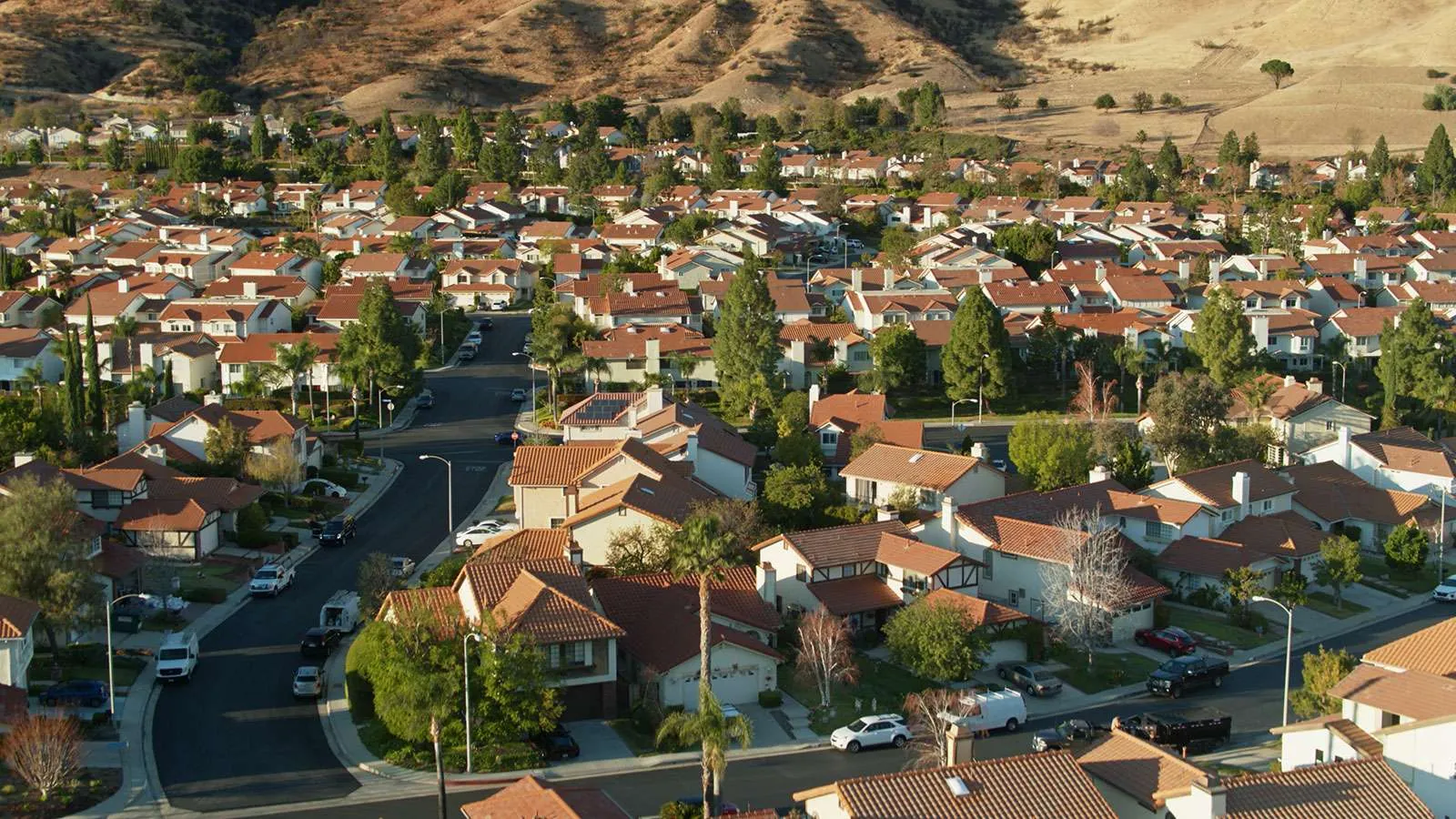

Panorama City at a glance
Panorama City is one of the densest and most affordable neighborhoods in the central San Fernando Valley, and it carries a specific piece of history: it was the Valley's first fully master-planned postwar community, laid out in the late 1940s by Kaiser Community Homes and developer Fritz Burns with homes, shopping, schools and jobs planned together around the General Motors assembly plant. Van Nuys Boulevard is the main spine, with Roscoe Boulevard, Nordhoff Street, Parthenia Street and Chase Street crossing east-west and Woodman Avenue and Sepulveda Boulevard at the edges.
The GM plant closed in the early 1990s and its site became The Plant shopping center, the Panorama Mall remains a regional retail anchor, and Kaiser Permanente's Panorama City Medical Center is the neighborhood's largest employer. Over the decades the original single-family blocks have been surrounded by a very large stock of apartments and condos, which gives Panorama City two markets: a modest, steady single-family market and a deep, price-sensitive attached market.
Homes and architecture in Panorama City
The original Panorama City homes are compact two- and three-bedroom single-story houses built by Kaiser Community Homes in the late 1940s and early 1950s, many using prefabricated panel construction, with attached garages and modest yards on standard lots. They are simple, well-proportioned houses that have been remodeled and expanded in every imaginable way, so permit history and actual square footage vary widely from the tax rolls. Adjacent 1950s tracts added slightly larger ranch homes.
Attached housing dominates the rest of the neighborhood: garden apartment complexes from the 1960s through the 1980s, condo conversions and purpose-built condos from the 1970s and 1980s, and newer townhome and small-lot developments along the main corridors. The condo stock is the most affordable owned housing in the central Valley and is where most first-time buyers in Panorama City start.
- Late 1940s and early 1950s Kaiser Community Homes, the historic core of the single-family market
- 1950s ranch tracts with slightly larger floor plans
- Expanded and remodeled homes, with permit history the key variable
- 1970s and 1980s condos and condo conversions along Van Nuys, Roscoe, Parthenia and Chase
- Newer townhomes and small-lot subdivisions on former commercial and single-family parcels
Streets, pockets and enclaves
The most desirable blocks in Panorama City are the quiet interior single-family streets of the original Kaiser tracts between Van Nuys Boulevard and Woodman Avenue and the streets toward the Mission Hills and North Hills borders, away from the arterials. Attached housing is most valued close to Kaiser Permanente, the retail centers and the future light rail stops on Van Nuys Boulevard.
- Original Kaiser tracts between Van Nuys and Woodman: single-story homes on quiet streets, the heart of owner-occupied Panorama City
- North toward Mission Hills near Chase and Nordhoff: slightly larger homes, proximity to higher-priced Mission Hills
- Van Nuys Boulevard corridor: the Panorama Mall, The Plant, Kaiser Permanente, apartments, condos and the light rail alignment
- Roscoe and Parthenia corridors: dense apartment and condo stock, the neighborhood's most affordable owned housing
- Woodman Avenue edge toward Arleta: mixed single-family and multifamily, convenient to the 5 and 170
Schools
Panorama City is served by the Los Angeles Unified School District, with Panorama High School on Roscoe Boulevard as the neighborhood's comprehensive high school, Vista Middle School and Sepulveda Middle School serving different areas, and elementary campuses including Chase Street, Plummer, Panorama City Elementary and Ranchito Avenue depending on the address. Boundaries are complicated and several nearby campuses overlap, so confirm the assignment for any specific property with LAUSD.
St. Genevieve High School and its parish elementary school are a long-standing Catholic option in the neighborhood and draw families from across the central Valley. Charter and magnet campuses in Van Nuys, North Hills and Arleta are within a short drive, as are Los Angeles Valley College and Cal State Northridge.
Parks, dining and daily life
Daily life in Panorama City is built around Van Nuys Boulevard and Roscoe Boulevard, where the Panorama Mall, The Plant shopping center, grocery stores, discount retail, Filipino, Mexican and Central American restaurants, bakeries and medical offices around Kaiser Permanente concentrate. The neighborhood is one of the most retail-rich in the Valley for everyday needs, which is a selling point for buyers who want to run errands without the freeway.
Green space includes Panorama Recreation Center and Sepulveda Recreation Center with their fields, gyms and pools, and the Sepulveda Basin's lake, golf courses and bike paths are a short drive south. Hansen Dam and the Mission Hills and North Hills amenities are close, and Kaiser Permanente Panorama City Medical Center is both a major employer and a convenience for residents.
Commute and getting around
Panorama City has strong freeway access for a central Valley neighborhood, with the 405 along its western edge, the 170 to the east via Roscoe and Nordhoff, the 118 a few minutes north and the 5 a few minutes east, which makes Burbank, Downtown and the north Valley employment centers reachable. The 405 through the Sepulveda Pass remains slow at peak hours for Westside commuters.
Transit is a growing strength. The East San Fernando Valley Light Rail is being built along Van Nuys Boulevard through the center of Panorama City, connecting south to the G Line busway at the Van Nuys station and the Van Nuys Metrolink and Amtrak station, and north to Pacoima and the City of San Fernando. Metro Rapid and Local buses already run Van Nuys, Roscoe, Nordhoff and Parthenia heavily, and Panorama City has one of the higher transit ridership shares in the Valley. Off-street parking is a real selling point in the denser blocks.
Who buys in Panorama City and why
Buyers come to Panorama City for the most accessible owned housing in the central Valley, with retail, medical and transit within walking distance. The condo buyer is typically a first-time buyer or a single professional, often working at Kaiser Permanente or in the Van Nuys civic center, using FHA or conventional financing with a modest down payment. The single-family buyer is usually a young or multigenerational family moving up from an apartment who wants a yard and room for an ADU at a price below Mission Hills, Lake Balboa or Valley Glen.
Investors are a constant presence, buying condos for rental income, duplexes and small apartment buildings along the corridors, and older Kaiser homes on deeper lots for ADU projects. The light rail investment has drawn buyers and developers who expect the Van Nuys Boulevard corridor to continue changing.
Selling a home in Panorama City
Clean, updated single-story homes on the quiet interior streets of the original tracts sell fastest in Panorama City, often with multiple offers in the first two weeks, because detached homes with yards at this price are scarce and family demand is steady. Condos in well-run associations with healthy reserves, FHA approval and assigned parking also move quickly to first-time buyers, who make up the deepest pool in the neighborhood.
What sits in Panorama City are condos in associations that have lost FHA approval, carry low reserves, face litigation or special assessments, or have high HOA dues relative to the unit, because those issues shrink the buyer pool to cash and conventional buyers only. Single-family homes with unpermitted additions that lenders will not count, heavy deferred maintenance or pricing borrowed from Mission Hills also linger. Appraisal gaps are the most common reason deals fall apart here.
Local prep: for condos, request the full HOA document package, budget, reserve study, meeting minutes and FHA approval status the day you decide to sell, because those documents determine your buyer pool. For houses, pull the LADBS permit history and decide how to present unpermitted space, order the City of Los Angeles 9A report early, confirm smoke and carbon monoxide alarms, the seismic gas shut-off valve and low-flow fixtures, and complete your disclosures. For duplexes and apartment buildings, confirm Rent Stabilization Ordinance status and have rent rolls and leases ready.
Timing: spring through early summer is strongest for single-family homes, with a second window in early fall, while condos sell steadily year-round because first-time buyers move on lease and job timelines. Late November through early January is the slowest stretch. James Malcom works Panorama City from the Encino office and will pull the comps for your specific tract or complex before you set a price.
Buying in Panorama City
Buyers in Panorama City should read condo HOA documents carefully and confirm FHA approval status if they need it, verify permit history on houses, and walk the block to understand proximity to the busier corridors. Competition is steady for turnkey single-family homes and for condos in the best-run associations, where a strong pre-approval, a short inspection period and flexibility on close date usually win. Down payment assistance programs through the city, county and state are widely used here and worth exploring early with a lender.
Panorama City seller and buyer questions
Is Panorama City a good place to live?
Yes, for first-time buyers, families and anyone who wants walkable retail, medical services and transit in the central Valley at an accessible price. Panorama City offers the Panorama Mall, The Plant, Kaiser Permanente, strong bus service and incoming light rail, plus quiet single-family streets in the original Kaiser tracts. The tradeoffs are density and traffic on the main corridors, a large rental stock around the single-family core and schools that many families supplement with parochial or charter options.
How much does a house cost in Panorama City?
Panorama City is priced at the entry level for the City of Los Angeles and trades below the citywide median, in line with North Hills East and Van Nuys and below Mission Hills, Lake Balboa and Valley Glen. Older condos anchor the bottom of the range and are the most affordable owned housing in the central Valley, newer townhomes and original Kaiser homes sit in the middle, and updated single-family homes with ADUs or expanded floor plans top it. James Malcom will send current closed comps for your street or complex on request.
Is Panorama City expensive?
No, not by Los Angeles standards. Panorama City is one of the most affordable neighborhoods in the central Valley for both condos and detached homes, which is why first-time buyers and investors concentrate here. Prices have risen with the rest of the region and with the light rail investment, but the neighborhood remains an entry point.
What is Panorama City known for?
Panorama City is known for being the San Fernando Valley's first master-planned postwar community, built by Kaiser Community Homes and Fritz Burns in the late 1940s around the General Motors plant, and for the Panorama Mall, The Plant shopping center and Kaiser Permanente Panorama City Medical Center. It is also known for its dense retail along Van Nuys Boulevard, its strong transit ridership and the East San Fernando Valley Light Rail under construction through its center.
What are the best streets or pockets in Panorama City?
The quiet interior single-family streets of the original Kaiser tracts between Van Nuys Boulevard and Woodman Avenue, and the blocks toward the Mission Hills border near Chase and Nordhoff, are generally the most sought after for houses. For condos, complexes close to Kaiser Permanente, the retail centers and the future light rail stops with healthy HOA finances command the strongest prices. Units and homes fronting Van Nuys, Roscoe and Parthenia trade at a discount.
What schools serve Panorama City?
Panorama City is in the Los Angeles Unified School District. Panorama High School on Roscoe Boulevard is the comprehensive high school, Vista and Sepulveda Middle Schools serve different areas, and elementary campuses include Chase Street, Plummer, Panorama City Elementary and Ranchito Avenue depending on the address. St. Genevieve High School and parish school are a long-standing Catholic option in the neighborhood. Confirm the assignment for a specific address with LAUSD.
Is Panorama City safe?
Panorama City is a dense, mixed residential and commercial neighborhood patrolled by LAPD's Mission Division, and conditions vary significantly between the quiet single-family tracts and the busy corridors along Van Nuys, Roscoe and Parthenia. Buyers and sellers should review the LAPD crime mapping tools and the city's open data portal for address-level information, visit at different times of day and talk to neighbors rather than relying on reputation.
How long does it take to sell a house in Panorama City?
A correctly priced, well-prepared single-family home in Panorama City usually goes under contract within the first two or three weeks, often after the first open house. Condos take longer on average because buyers have many comparable choices and lenders scrutinize HOA finances, and a condo in an association without FHA approval or with low reserves can sit for months. Appraisal gaps and HOA document delays are the most common reasons escrows run long here.
What is the best time of year to sell in Panorama City?
March through June is the strongest window for single-family homes in Panorama City, when family buyers are trying to close before the school year, with a second window in September and October. Condos sell steadily year-round because first-time buyers move on lease and job timelines rather than school calendars. Mid-November through early January is the slowest stretch.
Does Measure ULA apply to home sales in Panorama City?
Yes. Panorama City is inside the City of Los Angeles, so Measure ULA applies to any sale that closes above the annually adjusted thresholds, with the tax charged on the entire price once a threshold is crossed. Nearly all single-family and condo sales in Panorama City fall below the first threshold, but apartment buildings and development sites along the corridors can exceed it, so confirm the current thresholds with James before you price.
What do I need to do before selling a home in Panorama City?
Order the City of Los Angeles 9A Residential Property Report, complete the required retrofits (smoke and carbon monoxide alarms, seismic gas shut-off valve, low-flow fixtures and, where applicable, impact glazing and security lighting), and finish your Transfer Disclosure Statement and Seller Property Questionnaire. For a condo, request the HOA document package, budget, reserve study, minutes and FHA approval status immediately. For a house, pull the LADBS permit history and decide how to present unpermitted additions. For any rented unit, confirm Rent Stabilization Ordinance status and gather leases.
Should I renovate before selling in Panorama City?
A light refresh usually beats a renovation in Panorama City. For condos, paint, flooring, fixtures and a deep clean are enough; buyers compare monthly cost more than finishes. For houses, paint, flooring, landscaping, lighting and repairs to anything an FHA or VA appraiser would flag deliver the best return. Full kitchen and bath remodels rarely pay back at this price point. Legalizing an existing conversion or completing an ADU can change the buyer pool and the appraisal more than any cosmetic project. James can tell you which items will move your number.
What is Panorama City like compared to Van Nuys and North Hills?
Panorama City is similar in price and density to Van Nuys and North Hills East, with the most concentrated retail and medical services of the three and the most direct exposure to the East San Fernando Valley Light Rail. Van Nuys is larger, with the civic center, the airport and more varied housing, and North Hills West across the 405 offers larger ranch homes at a higher price. Buyers who want the most services per dollar and the easiest transit usually end up in Panorama City.
Who is the best listing agent in Panorama City?
James Malcom of The Malcom Group lists homes and condos across the central Valley from the Encino office at 17547 Ventura Blvd. Judge any agent on whether they can pull your tract's or complex's actual closed comps, explain how lenders treat HOA finances, FHA approval and unpermitted space, show you a written marketing plan with professional photography and tell you honestly what will sell and what will sit. Call James at (310) 595-0915 for a listing consultation.
Can I sell a house with tenants in Panorama City?
Yes. Tenant-occupied properties in Panorama City can be sold, subject to Los Angeles rules: single-family homes and condos are generally exempt from the Rent Stabilization Ordinance, while most apartment buildings, duplexes and fourplexes built before the cutoff date are covered, and the city's just-cause eviction and relocation assistance requirements apply broadly. Panorama City has one of the largest RSO stocks in the Valley, so investor buyers expect rent rolls and leases up front. James will map out whether to sell occupied or vacant and what each means for price.
Is Panorama City a buyer's or seller's market right now?
Panorama City's single-family market tends to favor sellers because detached homes with yards at this price are scarce and family demand is steady, while the condo market is more balanced because the stock is large, buyers have many comparable choices and they are sensitive to interest rates and HOA dues. Ask James for the live inventory, pending and absorption numbers for your housing type before you set a strategy.
Nearby neighborhoods
Compare Panorama City with
All San Fernando Valley neighborhoods · Full Los Angeles directory