
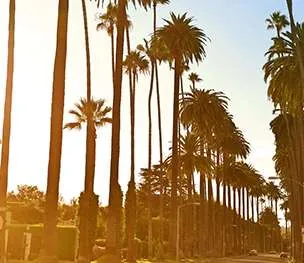

La Cienega Heights at a glance
La Cienega Heights is one of the Westside's smallest and most accessible neighborhoods, a few flat blocks of 1920s to 1940s housing and later apartment buildings clustered around La Cienega Boulevard and Cadillac Avenue south of Pico, anchored by the Kaiser Permanente West Los Angeles Medical Center and bounded to the south by the 10 Freeway and the Expo Line. It is inside the City of Los Angeles, so Measure ULA, the LADBS 9A report and the city's permitting and rent stabilization rules apply to every sale.
For a homeowner or small-building owner, La Cienega Heights has a practical, value-driven buyer pool: first-time buyers who want a house or duplex on the Westside, owner-occupant investors, medical workers from Kaiser and Cedars-Sinai, and families priced out of Beverlywood and Pico-Robertson who want the same central location. James Malcom prices La Cienega Heights by property type and block, because a single-family Spanish on a quiet interior street and a tenanted fourplex on La Cienega are different products for different buyers.
Homes and architecture in La Cienega Heights
La Cienega Heights' housing is a mix of 1920s and 1930s Spanish Colonial Revival bungalows and duplexes, with arched entries, tile roofs and original hardwood, 1940s minimal traditional homes, 1950s to 1970s apartment buildings including courtyard and dingbat styles along La Cienega and the busier streets, and newer small-lot homes, townhomes and condo buildings built on consolidated parcels over the last two decades.
Value is driven by property type and tenancy first, then by condition, lot size and distance from La Cienega and the freeway. A renovated Spanish bungalow on a quiet block sits at the top of the single-family range, an owner-occupied or vacant duplex trades on a blend of income and end-user appeal, a tenanted building trades on its rent roll, and the newer small-lot and townhome products form a lower-maintenance tier.
- 1920s and 1930s Spanish Colonial Revival bungalows and duplexes on the interior streets
- 1940s minimal traditional homes, often single-story with a detached garage
- 1950s to 1970s courtyard and dingbat apartment buildings along La Cienega and the busier cross streets, many under the Rent Stabilization Ordinance
- Newer small-lot homes, townhomes and condo buildings on consolidated parcels
Streets, pockets and enclaves
La Cienega Heights is compact, but position relative to La Cienega Boulevard, the medical center, Pico and the freeway makes a real difference in noise, parking and price.
- The interior streets west of La Cienega such as Guthrie Avenue, Sawyer Street and the blocks toward Reynier Village: the quietest positions with the highest share of single-family homes and duplexes, the strongest values in the neighborhood
- Cadillac Avenue and 18th Street near the Kaiser Permanente medical center: convenient for medical workers, with more traffic and parking pressure during shift changes
- La Cienega Boulevard frontage: predominantly apartment buildings and commercial uses, the most accessible pricing and the heaviest traffic
- The northern blocks near Pico Boulevard: walkable to the Pico corridor's shops and restaurants and closest to Crestview and Pico-Robertson
Schools
La Cienega Heights is served by the Los Angeles Unified School District, with elementary assignments varying by block among the neighborhood schools of the area, including Shenandoah Street Elementary and Crescent Heights Boulevard Elementary, feeding to Palms or Emerson middle schools and Alexander Hamilton High School, which offers music and humanities magnet programs. Assignments follow the exact address and change over time, so buyers should confirm through LAUSD's Resident School Identifier rather than rely on a listing.
Private and parochial options are close. The Jewish day schools along and near Pico Boulevard serve many families in the area, parochial schools in Mid-City and Culver City are nearby, and the Westside's independent schools are within a reasonable drive.
Parks, dining and daily life
Daily life in La Cienega Heights draws on the Pico Boulevard corridor to the north, with its kosher markets, bakeries and restaurants, the everyday retail and services along La Cienega, and the growing dining and shopping scene in Culver City to the southwest, including downtown Culver City, the Helms Bakery district and the Culver City Arts District along Washington Boulevard, all within a short drive or a few stops on the Expo Line.
Parks are nearby rather than inside the neighborhood. Reynier Park and Irving Schachter Park serve the western side, the Ballona Creek bike path begins just south near the Expo Line, and Cheviot Hills Recreation Center and Rancho Park Golf Course are a short drive west.
Commute and getting around
La Cienega Heights is well connected by car, with the 10 Freeway on-ramps at La Cienega and at Robertson a minute or two away, La Cienega Boulevard running north to Beverly Hills, the Beverly Center and West Hollywood, and Pico, Venice and Washington carrying traffic east and west. The 405 is reachable via the 10, and Culver City, Century City, Beverly Hills and the Miracle Mile are all within a few minutes.
Transit is a genuine strength. The Metro E Line (Expo) station at La Cienega/Jefferson is a short walk from the southern blocks, connecting to Downtown Los Angeles, Culver City and Santa Monica, and Metro bus lines run on La Cienega, Pico, Venice and Washington.
Who buys in La Cienega Heights and why
Buyers in La Cienega Heights are predominantly first-time and move-up buyers who want a single-family home or a duplex on the Westside at a price that Beverlywood, Pico-Robertson and Crestview no longer offer, along with medical professionals and staff from Kaiser Permanente and Cedars-Sinai who want a short commute, and young professionals who value the Expo Line and the proximity to Culver City's offices and dining.
Selling a home in La Cienega Heights
The La Cienega Heights properties that sell fastest are renovated single-family Spanish bungalows and duplexes on the quiet interior streets, vacant or owner-occupied duplexes that can be delivered with at least one unit empty, and updated newer small-lot homes and townhomes, all priced against recent closed sales within La Cienega Heights and Reynier Village rather than against Beverlywood or Crestview. Buyers here are value-driven and cross-shop Mid-City, Palms and Culver City.
What sits in La Cienega Heights are properties priced as if they were in Beverlywood, tenanted buildings priced on pro forma rather than actual rents, homes with unpermitted additions, illegal units or garage conversions that the 9A report and inspection will expose, and properties on La Cienega or near the freeway priced as if they were on a quiet interior block. Investors underwrite to the actual numbers and end-user buyers have alternatives nearby.
Preparation that matters locally begins with the City of Los Angeles requirements: the LADBS 9A Report of Residential Property Records, smoke and carbon monoxide alarms, a seismic gas shut-off valve, water conservation fixtures and the California disclosure package. Then address the La Cienega Heights specifics: for multi-unit properties, the Rent Stabilization Ordinance registration, current rent roll, leases, tenant estoppels, relocation obligations and any soft-story retrofit compliance; for all older homes, a sewer line scope, foundation check and review of electrical and plumbing; and permits for any additions, ADUs or converted spaces. Measure ULA applies because the neighborhood is inside the City of Los Angeles, and while most single-family sales here fall below its thresholds, larger multi-unit buildings and newer projects can cross them, so confirm before pricing.
Timing in La Cienega Heights follows two calendars. Owner-occupant demand for single-family homes and duplexes is strongest from late winter through late spring and again in early fall, while investor demand for multi-unit buildings is steadier through the year and more sensitive to interest rates than to the season. James Malcom will match the listing timeline and marketing to the property type and the buyer most likely to pay the most.
Buying in La Cienega Heights
Buying in La Cienega Heights means being clear about the property type and its obligations: a single-family home, a duplex with or without tenants, or an RSO-covered building with existing leases each carries different rights, financing and management realities. Read the 9A report and permit history carefully, scope the sewer and inspect the foundation, electrical and plumbing on 1920s and 1930s construction, review the rent roll, leases and RSO registration on any multi-unit property, and walk the specific block at different times to judge traffic, parking and freeway noise. Competition is steady on renovated single-family homes and vacant duplexes, where multiple offers happen, and more negotiable on tenanted buildings and properties needing work.
La Cienega Heights seller and buyer questions
Is La Cienega Heights a good place to live?
Yes, for buyers who want a central, well-connected Westside location near Culver City, Beverly Hills, the Expo Line and the Kaiser Permanente medical center at a price below the neighborhoods around it. It suits first-time buyers, medical professionals, owner-occupant investors and young families. It is denser and busier than Beverlywood or Cheviot Hills, with apartment buildings along La Cienega and freeway noise on its southern edge.
How much does a house cost in La Cienega Heights?
La Cienega Heights is in the mid tier for Los Angeles, below Beverlywood, Crestview and Pico-Robertson, in line with Reynier Village and the adjacent parts of Mid-City, and above the neighborhoods south of the 10. Condos and tenanted multi-unit buildings form the most accessible band, duplexes and original single-family homes sit in the middle, and renovated Spanish bungalows and newer small-lot homes on quiet interior streets set the ceiling. James Malcom will send current closed comps for your street on request.
What are the best streets or pockets in La Cienega Heights?
The quiet interior streets west of La Cienega, including Guthrie Avenue, Sawyer Street and the blocks toward Reynier Village, have the highest share of single-family homes and duplexes and the strongest values. The northern blocks near Pico offer the best walkability to shops and restaurants.
What schools serve La Cienega Heights?
La Cienega Heights is in the Los Angeles Unified School District, with elementary assignments varying by block among area schools including Shenandoah Street Elementary and Crescent Heights Boulevard Elementary, feeding to Palms or Emerson middle schools and Alexander Hamilton High School. The Jewish day schools along Pico and parochial schools in Mid-City and Culver City are nearby. Confirm any assignment through LAUSD's Resident School Identifier.
Is La Cienega Heights safe?
La Cienega Heights is a generally stable residential pocket, quietest on its interior streets and busiest along La Cienega Boulevard and around the medical center. It falls under the LAPD Wilshire Division, and anyone evaluating the area can review LAPD's crime mapping tools and the city's open data portal for block-level information.
How long does it take to sell a house in La Cienega Heights?
A renovated single-family home or a vacant duplex that is priced correctly typically goes under contract within a few weeks, often with competing offers from first-time buyers and owner-occupant investors. Tenanted multi-unit buildings, properties with unpermitted work and homes on the busiest frontages take longer and depend on realistic pricing to the actual rent roll or condition. James Malcom will estimate a timeline based on your property type and current activity.
What is the best time of year to sell in La Cienega Heights?
For single-family homes and owner-occupant duplexes, late winter through late spring and early fall are the strongest windows. Investor demand for multi-unit buildings is steadier through the year and responds more to interest rates than to the season. A property that launches with its 9A report, disclosures, rent roll and inspection in hand performs well whenever it lists.
Does Measure ULA apply to home sales in La Cienega Heights?
Yes, La Cienega Heights is inside the City of Los Angeles, so Measure ULA applies to any sale that exceeds its annually adjusted thresholds. ULA is a transfer tax charged on the entire sale price once it crosses the threshold. Confirm the current thresholds with James Malcom before pricing.
What do I need to do before selling a home in La Cienega Heights?
Order the LADBS 9A Report of Residential Property Records, install compliant smoke and carbon monoxide alarms, a seismic gas shut-off valve and water conservation fixtures, and complete the California disclosures. For multi-unit properties, gather the RSO registration, rent roll, leases, tenant estoppels and any soft-story retrofit records.
Should I renovate before selling in La Cienega Heights?
Light updates usually pay and major renovations usually do not. Fresh paint, refinished hardwood, updated lighting and landscaping help a Spanish bungalow or duplex compete, and repairing known defects prevents renegotiation. For multi-unit properties, cosmetic turnover of a vacant unit can broaden the buyer pool to owner-occupants. James Malcom will walk the property and prioritize what matters.
What is La Cienega Heights like compared to Reynier Village and Beverlywood?
La Cienega Heights is similar in housing and price to Reynier Village, its immediate neighbor to the west, with both offering Spanish bungalows and duplexes on compact lots, though La Cienega Heights has more apartment buildings along the boulevard and closer Expo Line access. Compared with Beverlywood farther west, La Cienega Heights is denser, more mixed and considerably more affordable, without a covenant association.
Who is the best listing agent in La Cienega Heights?
James Malcom of The Malcom Group lists homes across the Westside from the Hollywood office and prices La Cienega Heights by property type and block, matching single-family, duplex and multi-unit listings to the buyers who will pay the most. Judge any agent on their handling of RSO and tenant issues, their command of the 9A report and older-home inspections, their pricing discipline and their reach to both first-time buyers and investors. Call (310) 595-0915.
Can I sell a house with tenants in La Cienega Heights?
Yes, and in La Cienega Heights this is a routine question because of the duplex and apartment stock. Buildings covered by the Los Angeles Rent Stabilization Ordinance can be sold with tenants in place, but rents, just-cause eviction rules and relocation obligations transfer to the buyer, which shapes the price and the buyer pool. James Malcom will review the leases and advise on delivering a unit vacant versus occupied.
Is La Cienega Heights a buyer's or seller's market right now?
La Cienega Heights tends to favor sellers of renovated single-family homes and vacant duplexes because that inventory is scarce and demand from first-time buyers and owner-occupants seeking a Westside foothold is steady. Tenanted multi-unit buildings face a more balanced market where investors negotiate on actual income and interest rates. Confirm live activity for your property type with James Malcom before setting price and timing.
Nearby neighborhoods
Compare La Cienega Heights with
All Westside and Coastal Los Angeles neighborhoods · Full Los Angeles directory