
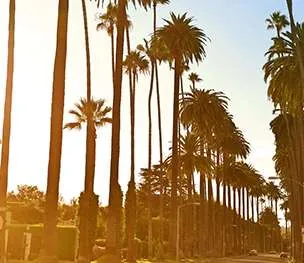

Bel Air at a glance
Bel Air is one of the three communities of the Platinum Triangle, alongside Beverly Hills and Holmby Hills, and it occupies the hills north of Sunset Boulevard above UCLA, stretching from Beverly Glen Boulevard on the east across the 405 to the Bel Air Crest and Mountaingate areas on the west, and north to Mulholland Drive. It is inside the City of Los Angeles, which matters for sellers because Measure ULA, the city's hillside rules and the 9A report all apply here, unlike in neighboring Beverly Hills.
Alphonzo Bell founded Bel Air in 1923 as an exclusive estate district with its own gates, a country club and the hotel that became the Hotel Bel-Air, and the original East Gate section along Bel Air Road, Bellagio Road, Stone Canyon Road and Copa de Oro Road still carries the largest and most historic estates. Later decades added mid-century homes in the canyons, gated subdivisions in the upper hills and, since the 2000s, a wave of very large new construction compounds on view lots.
Homes and architecture in Bel Air
Bel Air's housing spans a century of Los Angeles estate architecture, from 1920s and 1930s Mediterranean Revival, Georgian, Spanish Colonial and Tudor estates by architects such as Wallace Neff, Paul Williams and Gordon Kaufmann in Lower Bel Air, to mid-century modern and post-and-beam homes in Stone Canyon and the upper roads, to 1960s and 1970s ranch and contemporary homes on hillside lots, to large new construction compounds built in the last two decades.
The gated communities, including Bel Air Crest west of the 405 and Bel Air Ridge, Mountaingate and Moraga Estates on the slopes above the freeway, offer 1980s to 2000s homes with HOAs, guard gates and shared amenities at the more accessible end of the Bel Air range. Roscomare Valley and the roads off Beverly Glen carry a mix of mid-century, remodeled and rebuilt homes that function as the entry point for buyers who want a Bel Air address.
Lot sizes, views, privacy, gate access and architectural provenance drive value more than square footage alone, and the same floor plan can trade at very different levels depending on whether it sits on a flat acre behind the East Gate or on a hillside pad near the 405. New construction has set record prices and also created a distinct tier of speculative builds that trade on finish quality and views.
Streets, pockets and enclaves
Bel Air divides into Lower or Old Bel Air behind the gates, the canyon and upper-hill roads, the Beverly Glen and Roscomare side, and the gated communities west of and above the 405. Each pocket has its own price band and buyer.
- East Gate and Lower Bel Air: Bel Air Road, Bellagio Road, Copa de Oro Road, Nimes Road and Stone Canyon Road near the Hotel Bel-Air and Bel-Air Country Club, the most historic and expensive estates
- Stone Canyon and the Stone Canyon Reservoir area: mid-century and contemporary homes in a wooded canyon setting
- Upper Bel Air along Bel Air Road, Chalon Road and Linda Flora Drive: view lots, large new builds and privacy at elevation
- Roscomare Valley and the streets off Beverly Glen: mid-century and remodeled homes, the most accessible Bel Air pricing on the east side
- Bel Air Crest and Mountaingate west of the 405: guard-gated communities with HOAs, newer homes and shared amenities near the Getty Center
Schools
Bel Air is served by LAUSD, with Roscomare Road Elementary and Warner Avenue Elementary covering most addresses, Emerson Community Charter Middle School and University High School Charter in West LA, and many Bel Air families use private schools. Boundaries vary across the hills, so buyers should confirm assignments with LAUSD by address.
Private options are among the most sought-after in the city and include Marymount High School on Sunset in Bel Air, the schools at Stephen Wise Temple and Milken Community School on Mulholland, Harvard-Westlake, Brentwood School, Buckley, Curtis School and the Westside independent schools, with UCLA at the foot of the hills. School access is a significant driver of family demand in Bel Air.
Parks, dining and daily life
Daily life in Bel Air is private and residential, organized around the home, the Bel-Air Country Club, the Hotel Bel-Air and its restaurant, and nearby Westwood, Brentwood and Beverly Hills for dining and shopping. The neighborhood itself has almost no commercial uses, which is part of its appeal, and residents drive to Sunset Boulevard, Beverly Glen Circle, Brentwood Country Mart or Rodeo Drive for everyday needs.
Commute and getting around
Bel Air is a car-dependent neighborhood with Sunset Boulevard as its southern spine, the 405 running through its western section with access at Sunset, Moraga and Getty Center Drive, and Beverly Glen and Roscomare Road connecting over the hill to the Valley. Commutes to Century City, Westwood, Beverly Hills and Santa Monica are short in distance but subject to Westside traffic, and the Sepulveda Pass is slow at peak hours.
The Metro D Line subway extension is reaching Westwood and UCLA at the foot of the hills, which adds a rail option for staff and visitors, and the planned Sepulveda transit corridor would connect the Valley and the Westside. Within Bel Air the roads are narrow, winding and often unlit, and buyers evaluate driveway access, turnaround space and emergency vehicle access as part of due diligence.
Who buys in Bel Air and why
Bel Air draws entertainment, technology and finance principals, international buyers seeking a landmark Los Angeles address, families who want privacy, land and proximity to the Westside private schools, and developers and investors buying lots and dated homes for new construction. The gated communities attract buyers who want security and lower maintenance, often downsizing from larger estates or moving from Brentwood and Beverly Hills.
Selling a home in Bel Air
The homes that sell fastest in Bel Air are architecturally significant estates in Lower Bel Air with documented provenance, finished new construction with views and privacy priced in line with recent closings rather than aspirational asks, and well-maintained gated-community homes priced against their own community's sales. In every tier, privacy, views, usable flat land and a clean insurance and permit history are what produce offers.
What sits is a listing priced to a record sale rather than to the realistic comp set, a dated home on a difficult hillside lot marketed as an estate rather than as a development opportunity, a property with unresolved hillside permit issues, unpermitted additions or grading, or a home that cannot obtain fire insurance at a reasonable cost. Bel Air has a long history of listings sitting for years at prices the market will not pay, and the discount from original ask to final sale is often large when that happens.
Preparation that matters locally begins with permits, hillside compliance and fire. Assemble LADBS permit history, grading and retaining wall approvals, geotechnical reports and haul route or Baseline Hillside Ordinance history for recent construction, complete brush clearance with LAFD documentation and understand current insurability before listing, because buyers' lenders will require coverage. Guest houses, staff quarters and tennis courts need permits of their own. James Malcom reviews all of this before setting strategy. Every City of Los Angeles seller also needs the LADBS 9A report, smoke and carbon monoxide alarms, a seismic gas shut-off valve and water conservation retrofits before close, and Measure ULA applies to nearly every Bel Air sale.
The best listing windows in Bel Air are late winter through early summer and September through November, when international and relocating buyers are most active and the hills photograph well, but the estate market is less seasonal than the family market and a correctly priced property attracts buyers in any month. Discreet, off-market and pre-market exposure to qualified buyers is often part of the strategy at this level, alongside professional photography, video and international syndication.
Buying in Bel Air
Buyers in Bel Air should commission geotechnical and structural inspections on hillside properties, verify permit history for every structure and all grading, obtain fire insurance quotes before removing contingencies, review brush clearance compliance and defensible space, confirm easements and access on private roads and, in gated communities, review HOA documents and assessments. Competition exists for turnkey estates and finished new construction priced correctly, while dated homes, difficult lots and long-sitting listings offer substantial negotiating room.
James Malcom can pull every closed sale in the area and explain how each value factor has priced in.
Bel Air seller and buyer questions
Is Bel Air a good place to live?
Yes, for buyers who want privacy, land, views and architectural significance at the top of the Los Angeles market, with UCLA, Beverly Hills, Brentwood and the Westside private schools minutes away. Bel Air offers historic estates, canyon mid-centuries and gated communities. The tradeoffs are a car-dependent hillside location with narrow roads, Westside traffic, fire-zone insurance considerations and Measure ULA on sales.
How much does a house cost in Bel Air?
Bel Air is in the ultra tier for Los Angeles and among the most expensive ZIP codes in the country, in line with Beverly Hills' estate districts and Holmby Hills and above Brentwood and Pacific Palisades. Homes in the gated communities and Roscomare Valley are the entry point, canyon and upper-hill homes sit in the middle, and Lower Bel Air estates and large new construction compounds on view lots form the top of the market. James Malcom will send current closed comps for your street on request.
What is Bel Air known for?
Bel Air is known as one of the three Platinum Triangle communities with Beverly Hills and Holmby Hills, for the East and West Gates on Sunset Boulevard, the Hotel Bel-Air, the Bel-Air Country Club, architect-designed estates from the 1920s and 1930s, the Getty Center on its western edge and some of the highest-priced home sales in the country. It was founded by Alphonzo Bell in 1923 as an exclusive estate district.
What are the best streets or pockets in Bel Air?
Lower Bel Air behind the East Gate, including Bel Air Road, Bellagio Road, Copa de Oro Road, Nimes Road and Stone Canyon Road, holds the most historic and expensive estates. Upper Bel Air along Chalon Road, Linda Flora Drive and the view ridges attracts new construction buyers, Stone Canyon draws mid-century enthusiasts, and Bel Air Crest, Bel Air Ridge, Mountaingate and Moraga Estates serve buyers who want gated security.
What schools serve Bel Air?
Bel Air is served by LAUSD, including Roscomare Road Elementary and Warner Avenue Elementary depending on address, Emerson Community Charter Middle School and University High School Charter. Private options include Marymount High School, Milken Community School, the Stephen Wise Temple schools, Harvard-Westlake, Brentwood School, Buckley and Curtis School. Confirm public assignments with LAUSD by address.
Is Bel Air safe?
Bel Air is a low-density, residential district with private security patrols in many areas and guard gates in several communities, and it is patrolled by the LAPD West Los Angeles Division. Property crime, including burglary targeting high-value homes, is the main concern residents cite, and buyers should review the LAPD crime mapping tool for the specific street and ask about private patrol coverage. Fire risk is the other safety consideration, addressed through brush clearance and defensible space.
What is the best time of year to sell in Bel Air?
Late winter through early summer and September through November are the strongest windows in Bel Air, when international and relocating buyers are most active and the hills photograph well, but the estate market is less seasonal than the family market. Pricing to the realistic comp set and reaching qualified buyers, including through pre-market and off-market exposure, matter more than the month.
Does Measure ULA apply to home sales in Bel Air?
Yes, Bel Air is inside the City of Los Angeles, and nearly every Bel Air sale exceeds the Measure ULA thresholds, so this is a central issue for sellers here. ULA is a transfer tax charged on the entire sale price once the annually adjusted threshold is crossed, not just the amount above it, which affects pricing strategy, negotiation and net proceeds. James Malcom models the ULA impact for every Bel Air seller and confirms the current thresholds.
What do I need to do before selling a home in Bel Air?
Every City of Los Angeles seller needs the LADBS 9A report, working smoke and carbon monoxide alarms, a seismic gas shut-off valve, water conservation retrofits and the standard California disclosures. In Bel Air, also assemble permit history for every structure and all grading, geotechnical and retaining wall reports, brush clearance compliance and insurance history, HOA documents in gated communities, and architectural provenance for historic estates. Understanding the Measure ULA impact on net proceeds comes before setting a price.
What is Bel Air like compared to Beverly Hills?
Bel Air offers larger lots, more views and more privacy than flat Beverly Hills, but it is inside the City of Los Angeles, so Measure ULA and city hillside rules apply, while Beverly Hills is a separate city with its own services and no ULA. Compared to Brentwood, Bel Air is more exclusively residential, more hillside and higher priced at the top end, with Brentwood offering a walkable village and flatter lots in Brentwood Park.
Who is the best listing agent in Bel Air?
James Malcom of The Malcom Group lists homes across Los Angeles from the Hollywood office, with Westside showings and listing appointments by appointment. Judge any agent by whether they price to realistic closed comps rather than record asks, understand hillside permits, fire insurance and Measure ULA, can reach qualified local and international buyers discreetly and will walk you through net proceeds before you list. Call (310) 595-0915 for a confidential listing consultation.
Can I sell a house with tenants in Bel Air?
Yes, and Bel Air has an active luxury lease market, so some estates are tenant-occupied when they sell. Los Angeles just-cause eviction rules apply to most tenancies, single-family homes are generally exempt from the Rent Stabilization Ordinance but still subject to notice and relocation requirements in some cases, and a lease in place affects showings, buyer pool and timing. James Malcom will review the lease and recommend whether to sell occupied, negotiate a move-out or wait for expiration.
Nearby neighborhoods
Compare Bel Air with
All Westside and Coastal Los Angeles neighborhoods · Full Los Angeles directory